No City for Pedestrians: Bengaluru’s Footpaths that Forgot its Pedestrians
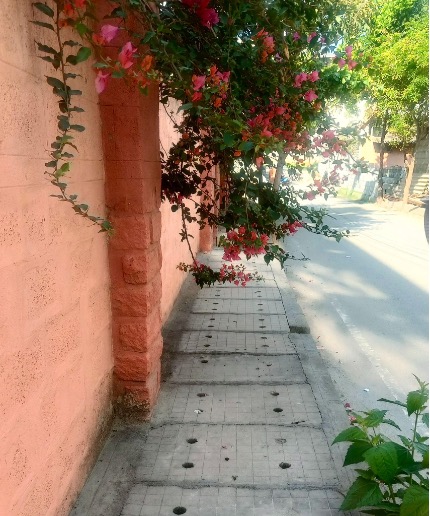
What Bengaluru’s neglected footpaths reveal about urban planning, government and citizen accountability, and the pedestrians’ right to walk
Pedestrians account for a significant share of Bengaluru’s road fatalities, yet the city’s footpaths are frequently narrow, damaged, obstructed or simply unusable. Through a walk across one neighbourhood, conversations with residents and an examination of existing accessibility guidelines, this piece looks at why safe walking remains so difficult — and argues that fixing Bengaluru’s footpaths requires treating pedestrians as central to urban mobility, not as an afterthought.
**The City’s Pedestrians at Risk**
Bengaluru’s traffic has become one of the most defining characteristics of the city. The 2025 TomTom Index Report ranked Bengaluru as the world’s second most congested city, after Mexico City, with an average congestion of 74.4%. While this figure reveals the city’s pertinent traffic problem, it also points towards the broader question about how the city approaches urban mobility. An effective transport system is not one which merely facilitates movement of traffic while staying laser-focused on roads as the primary transport mechanisms and vehicles as the primary modes of transport. Roads are merely a part of the larger architecture of a city’s transport system. Street lights, traffic rules, traffic police, cleanliness, pedestrian crossings, citizen consciousness, and walkable footpaths and pavements also constitute integral parts of this infrastructure. A transport system that is hyper-focused on roads and vehicles is at the risk of overlooking other crucial mechanisms of transport: footpaths and feet.
Safe, walkable and clean footpaths are not a luxury. They are a necessity to ensure the safety of everyone who navigates Bengaluru on foot. According to the Road Safety Report (2019-2022) that was reviewed and finalized by the Karnataka State Police and Karnataka State Road Safety Authority for the Bengaluru Metropolitan Region (BMR), a total of 1,882 pedestrian deaths occurred in road crashes within the four-year period. Out of these fatalities, about 26.2% comprised pedestrians who were over the age of 60, clearly marking older pedestrians as one of the vulnerable groups amongst pedestrians. It is important to note that the report preferred the use of the term ‘crashes’ instead of ‘accidents’. It explained that crashes could be analyzed and addressed through corrective measures, whereas accidents implied incidents that were simply beyond human control and therefore, inevitable. This distinction is necessary because it emphasizes accountability, the need for examining the conditions that contribute to pedestrian fatalities, and the measures that could prevent them. Recent figures too point towards the growing problem of pedestrian deaths. As per the Bengaluru Traffic Police’s Road Safety report (2023), Bengaluru recorded a total of 894 fatal crashes that resulted in 921 deaths. Out of these deaths, pedestrian deaths accounted for about 31% of fatalities. The report noted a 20% increase in pedestrian deaths since 2022, with 282 pedestrians losing their lives in 281 fatal crashes. Pedestrians were killed both during the daytime and nighttime, with motorcycles, light motor vehicles (LMVs) and lorries together accounting for 75% of all pedestrian fatalities. The report emphasized that accessible, safe, continuous footpaths and pedestrian crossings were necessary to protect pedestrians.
**Field Notes and Observations**
Although it may be difficult to determine exactly when and how these deaths occurred or attribute them directly to the absence or inadequacy of footpaths or pavements, it is undeniable that neglected and encroached footpaths pose serious risks to pedestrians in the city of Bengaluru. A 2025 report also points out that crossing congested streets, navigating intersections without properly marked crossings, and being forced to walk on carriageways because of footpaths that are either encroached upon, damaged, or severely dug up, exposes pedestrians to a variety of dangers. The persistence of preventable pedestrian fatalities therefore poses serious concerns and warrants a closer examination of the condition, maintenance and accessibility of footpaths in Bengaluru. To understand this issue firsthand, I decided to walk the footpaths of Bengaluru in one of Bengaluru’s rapidly urbanising, mixed-income neighbourhoods. To my shock, I found myself unable to walk the footpaths for even 300 metres without facing an interruption of some sort. Sometimes, the interruption came within just a few steps. When I had just begun walking, I was stopped by a barricade directly placed on the footpath, blocking my way. I got off the footpath and looked ahead towards the road that lay ahead of me. The road seemed quite narrow and broken itself. When I reached that point of the road, I saw that it had been dug up, apparently many times over, and not filled back up properly. Perhaps the workers who had carried out the roadwork had forgotten to remove the barricade too, just like they had forgotten to restore the road.
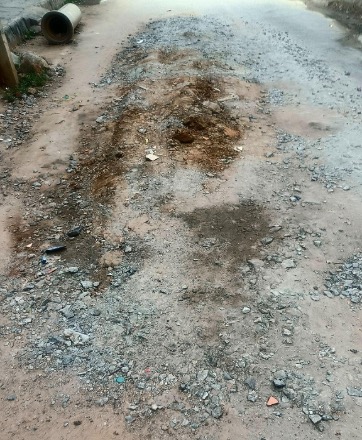
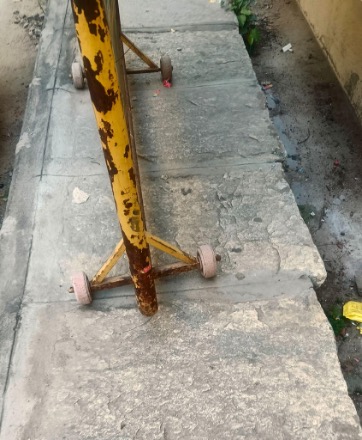
As I continued walking in different lanes of the neighbourhood, I came across some of the most unusual obstacles. A car and a commode had made their way onto the footpath which belonged to pedestrians. Once again, I had to get off the pavement and walk the narrow, broken roads, which honestly seemed more tolerable at that point, if not more inviting.
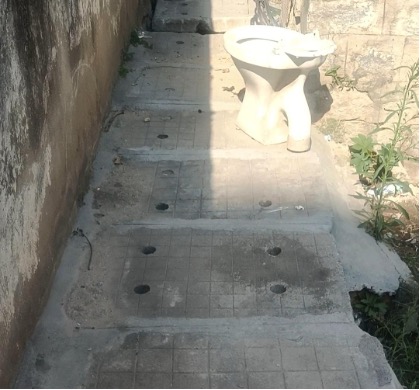
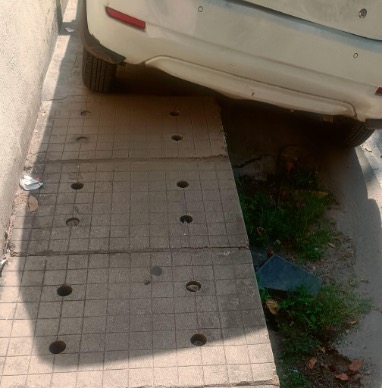
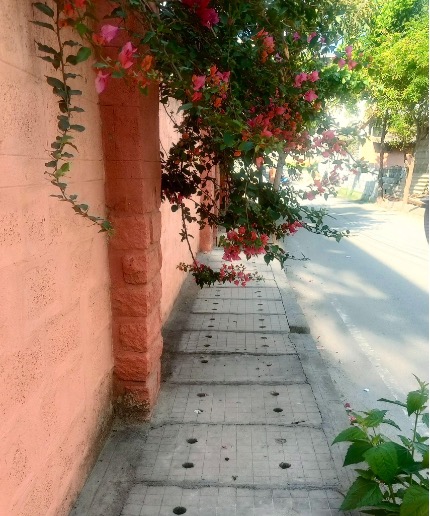
One of the common issues I experienced with most of the footpaths in this neighbourhood was that they were too narrow to comfortably walk on. I had to be conscious of not letting my shoulder brush against the walls of buildings that stood right beside some of these footpaths. On two occasions I ran into something I didn’t particularly mind: lovely Bougainvillea flowers and some snacks, though they still blocked my way. The only way to get past them was either to duck really low or get off the pavement again. I chose the latter.
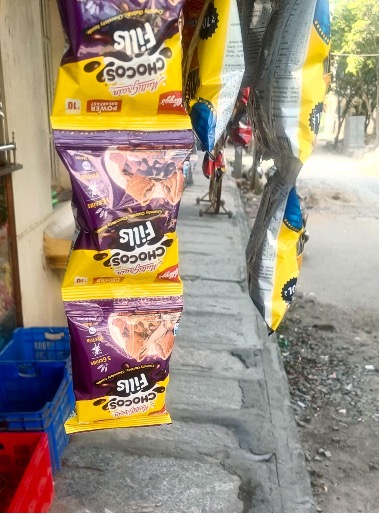
Then there were footpaths that were impossible to access. Construction workers near the area had stacked bricks, rods, tin sheets and other building materials on them.
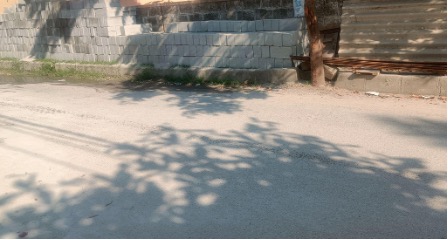
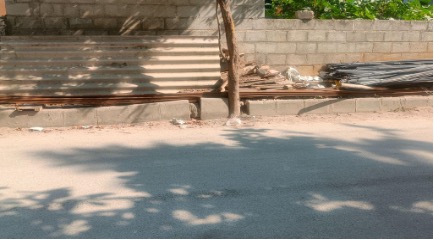
Some footpaths were badly damaged and some were simply too dirty to walk on.
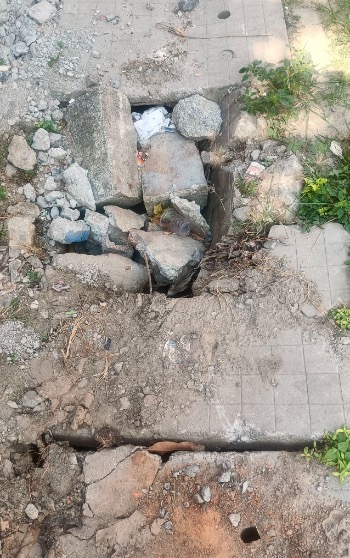
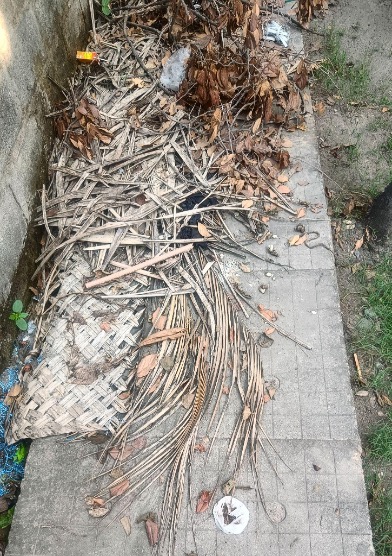
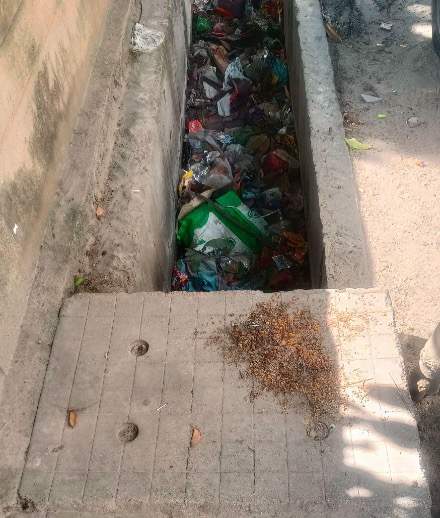
One of the footpaths led me directly to an open drain, while another found me at someone’s door. Sometimes, I was not entirely sure when the public pavement had turned into a private pavement, which had encroached upon the other’s space or if they shared the same space. But at this spot, the pavement had suddenly become pucca (cemented).
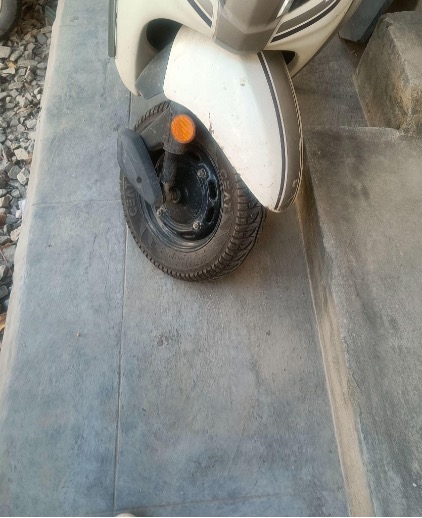
My experience of walking on these footpaths made me realize how much of what I had observed then, I had ignored for a long time. It was not that I had never walked these particular streets before, I had simply never paused to notice why I had subconsciously and almost automatically always chosen to walk the narrow roads, even if they were sometimes dug up or slightly waterlogged. The answer was simple: walking the road was a much more pleasant and convenient experience than walking these footpaths, despite the fact that these roads were also poorly maintained. At night, in particular, the roads felt safer than the narrow pavements that ran alongside the walls of abandoned buildings or those occupied by groups of men smoking cigarettes. With streetlights absent, these same footpaths that merely felt inconvenient during the day, felt particularly unsafe at night. Clearly, men and women experienced these footpaths differently.
**Human-Centered, People-First Design**
It is imperative to remember that not everyone experiences the city, its spaces and footpaths in the same manner. Some pedestrians face greater risks and challenges than others; particularly older people, children, and women. To make the city safe and welcoming for everyone, urban planning must account for the diverse needs of its pedestrians through an intersectional lens. It must emphasize human-centered and people-first designs that may offer potential solutions to many of these challenges by asking one fundamental question: how can footpaths in Bengaluru be designed and maintained in a manner that ensures that everyone, particularly, the most vulnerable pedestrians, can navigate footpaths safely, comfortably and independently? Building footpaths alone is not enough; they must be regularly maintained, properly lit with street lights, be wide enough to allow pedestrians to walk comfortably, and free from obstacles such as construction debris, barricades, garbage, and parked vehicles. They must be easily accessible to children, caregivers, older people and people with disabilities.
**Theory Versus Practice**
The questions of accessibility, safety, intersectionality, and people-first designs have been raised before. Guidelines have also been laid out. In fact, the Government of India’s Department of Empowerment of Persons with Disabilities, in its Accessible India Campaign that launched in 2015, clearly recognises footpaths among public spaces that should be considered in the built-environment accessibility. The Harmonised Guidelines & Standards for Universal Accessibility in India (2021) guidelines by the Government of India’s Ministry of Housing and Urban Affairs, lays out the requirements of accessibility for diverse social groups and emphasises the need for wider footpaths to comfortably accommodate caregivers accompanying young children, elderly family members or carrying household supplies. Despite such planning and guidelines, there remains a schism between planning and implementation. The responsibility for implementation is divided among various public actors and private actors. Meaningful, effective, and lasting change requires collective accountability and responsibility. A useful starting point would be to ensure that rather than focusing solely on questions of planning and design, human-centered, people-first approaches also incorporate clearly defined strategies for the execution of these designs, including implementation timelines, protocols for dealing with obstacles that may arise during execution, and defined areas of responsibility on the part of public and private stakeholders, to ensure that the proposed plans are also successfully implemented.
**The Footpath Issue Reveals Bigger Urban Problems**
On my walk, I realized that Bengaluru’s footpath problems revealed larger problems that plague the city. The car parked partly on the street and partly on the footpath, pointed towards a broader issue: lack of parking space. Similarly, building and construction materials on the footpaths exposed poor space availability and management. Open drains, garbage and dirty footpaths made evident the issues of waste management and disposal, while footpaths merging into private spaces pointed to unclear and undefined distinctions between public and private spaces. Yet, these problems cannot be understood as government failures alone. Garbage dumped on footpaths may point to larger waste disposal issues, but also raises questions on responsibility on the part of the residents. Similarly, cars parked partially on footpaths and partially on the road may reflect a shortage of parking space in some areas, but nevertheless force pedestrians to bear the brunt of such parking choices. During my research, I came across a particularly devastating incident dating back to 2016 that took place on 27th Main Road, HSR Ist Sector Bengaluru in which a car hit pedestrians who were walking on the footpath. The court records show that this car that was allegedly rashly and negligently driven, mounted a footpath, killing a 65-year old lady and seriously injuring two other pedestrians, all of whom were walking on the footpath. Although the court record does not specify the condition of the footpath, the incident highlights that pedestrian safety also requires raising citizen awareness and education among both pedestrians and non-pedestrians, in addition to responsible action by various government bodies.
**Citizens Speak: Practical Solutions to Practical Problems**
Bengaluru’s residents offer not only a perspective on the city’s footpath problem, but also ideas on how to address these problems. A resident of Bengaluru, who has lived in Bengaluru for about a decade, describes the footpaths on the 100 Feet Road in Indiranagar, which is one of the city’s posh areas; as broad, well-lit and safely accessible, with adequate space separating the footpath from the street on one side and the shops beyond them on the other. Soon after, she describes the neglected footpaths in areas near Hosa Road, Off Sarjapur Road, and Kasturi Nagar, whose footpaths exist in sharp contrast to Indiranagar’s footpaths. In these areas, footpaths exist in patches and are dug up. The roads lack proper street lights. Poor visibility of pedestrians in the absence of street lights poses major risks to pedestrians. She emphasizes the necessity of street lights, calling them, “Very basic but very overlooked, at times in Bengaluru." Taking the discussion towards migrants, particularly students, who cannot afford expensive cabs or autos, but rather rely on buses or metros, she says, “They walk to get to buses and metros. Walking is a part of their daily commute to college. Footpaths make that possible.” Her observation highlights how safe and accessible footpaths shape pedestrian safety and the ability to access affordable public transport. Naresh, another resident of Bengaluru, points out the poor maintenance of the city’s footpaths, but also sees them as a potential solution to a larger urban problem that the city faces: its declining groundwater table. Drawing from his own experience of having to rely on water tankers in his own neighbourhood, he suggests that while the city’s roads are paved with concrete, footpaths could be constructed with material that allows rainwater to seep into the ground, which could perhaps help to replenish ground water levels. Naresh’s simple but effective suggestion could potentially kill two birds with one stone.
Latest stories
- No City for Pedestrians: Bengaluru’s Footpaths that Forgot its Pedestrians
- Bengaluru: Yash praises Sai Pallavi’s preparation for Sita role
- Airport Wala Love in Jaane Tu... Ya Jaane Na
- Delhi runway hosts three Italian labels at Lakmē Fashion Week
- Nobody Haggles With a Packet of Milk. That Is Why Its Price Matters.
- Amit Aggarwal closes New Delhi fashion week with AM:IT collection
- Delhi’s AQI climbs to 187; ITO reaches severe level of 430
- Delhi’s October low falls to 17.1°C, with clear day ahead
- Delhi Jal Board seeks buyers for biogas from two sewage plants
- DP World extends India Championship title partnership through 2035
- Greater Noida’s Talwar wins 2026 PGTI Order of Merit, DP World Tour card
- Mumbai AQI at 127 as humid easterly winds persist
- Mumbai Crime Branch moves Navratri idol worship during demolition
- Delhi NCR events on October 19: garba, film, theatre and comedy
- Noida societies plan Durga Puja with alponas and themed pandals
- Delhi Half Marathon draws more than 41,000 participants
- Delhi-NCR Durga Puja pandals add tactile idols, ramps and quiet rooms
- Supa San opens Japanese izakaya with karaoke on Bandra’s Linking Road
- Bengaluru begins Marigowda Road resurfacing from Lalbagh to Dairy Circle
- Mumbai University receives FICCI University of the Year 2026 award
Cities
- Delhi news
- Gurgaon news
- Noida news
- Greater Noida news
- Ghaziabad news
- Faridabad news
- Delhi NCR news
- Bengaluru news
- Mumbai news
- Navi Mumbai news
- Thane news
Sections
- Top Stories
- Latest
- Politics
- Governance
- Civic Issues
- Transport and Traffic
- Metro
- Roads and Infrastructure
- Weather and Air Quality
- Business and Startups
- Real Estate
- Education
- Health
- Environment
- Courts and Policy
- Safety
- Arts and Culture
- Events
- Things To Do
- Food and Drink
- New Openings
- Shopping
- Nightlife
- Neighbourhoods
- People
- Technology
- Sports
GTK covers the news, people, culture, neighbourhoods, civic life and food shaping India’s cities. Better Starts With Us.