Mumbai: Nilaya Anthology presents four installations on offering
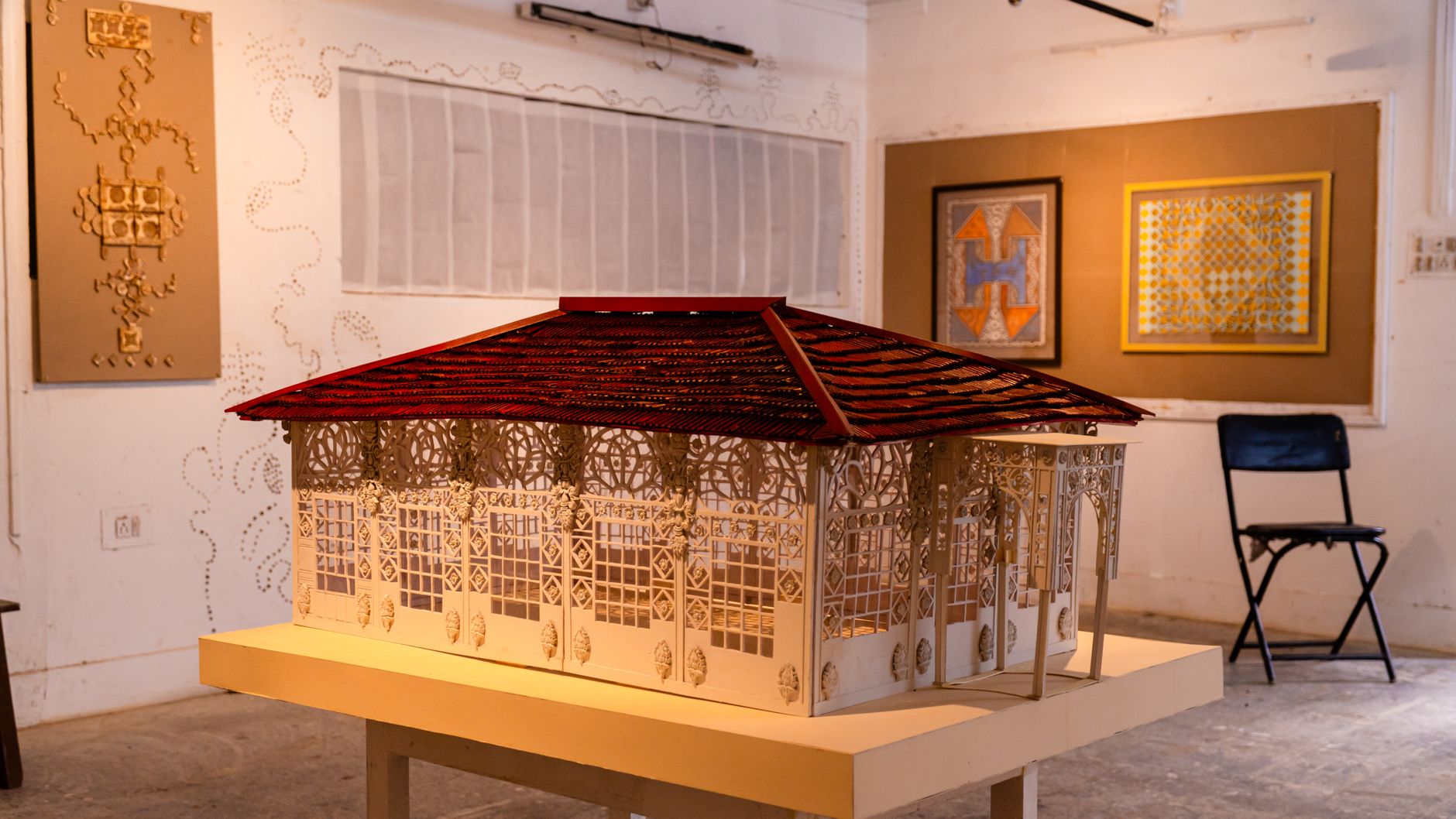
A Mumbai showcase brings together Masaba Gupta, Ashiesh Shah, Mayur and Tushar Vayeda, and Prerna Garg to explore ritual, material and intention through contemporary design.
The Art of Offering at Nilaya Anthology presents four installations that draw on forms of devotion and cultural practice from Indian life. The works range from Masaba Gupta’s red-toned symbols of domestic worship to the Vayeda brothers’ reflections on Warli knowledge and natural materials.
Masaba Gupta’s installation at Nilaya Anthology centres on a red Nandi, a chilli-made bindu and palm prints inspired by alta, the dye used on hands and feet during ceremonies. For Gupta, these elements of domestic worship become symbols of self-preservation. “The greatest offering is the conscious choice to remain joyful, courageous and full of faith,” she says.
The Art of Offering brings together Gupta, architect Ashiesh Shah, Warli artists Mayur and Tushar Vayeda, and artist-designer Prerna Garg. The four installations examine how acts and objects associated with devotion can carry cultural and personal meaning beyond ritual.
Shah takes abhishekam, the ceremonial bathing of a deity, as his starting point, using light and reflection to evoke the Brahmand, or universe. The Vayeda brothers, from Ganjad village in Palghar district, draw on the Warli community’s relationship with earth, seeds and the cycles of human life.
Mayur Vayeda says their work seeks to bring indigenous knowledge systems to people rather than present Warli art as decoration alone. Traditional Warli painting uses pigments from earth and paint made with freshly harvested rice, he says—materials that hold community knowledge alongside the image they create.
Latest stories
- Delhi: DTU opens applications for 219 assistant professor posts
- Mumbai: Nilaya Anthology presents four installations on offering
- Javed Akhtar opens Mumbai LitFest with Kabir, Rahim and Vrind
- Shigeru Ban discusses paper architecture at Mumbai design event
- Bengaluru: Chevittorma brings Kerala flood story to Ranga Shankara
- Delhi-NCR: GRAP Stage I begins as AQI enters poor category
- Mumbai: Varun Dhawan calls for focus on technicians at IIFA 2027
- Yamuna foam returns at Kalindi Kunj; DJB plans pre-Chhath defoaming
- Surajkund Diwali Mela opens in Faridabad with 300 stalls
- Trees of Delhi at 20: Pradip Krishen’s guide to 252 species
- Mumbai commuters seek more women’s coaches and lower AC local fares
- Kochi student wins Charles Correa Gold Medal at Mumbai ceremony
- Mumbai records 37.5°C as IMD issues hot, humid weather alert
- Central Railway plans 15-coach locals on Kalyan–Kasara route
- Delhi forms task group to track academic targets in government schools
- Parking and encroachments slow trans-Hindon roads in Ghaziabad
- Purana Qila hosts sitar and didgeridoo concert
- Delhi winter AQI showed no sustained improvement from 2022 to 2026: CREA
- Railway officials hear passenger feedback at KSR Bengaluru station
- Mumbai’s Neel Rajesh Shah shares CA Intermediate top rank with 502 marks
Cities
- Delhi news
- Gurgaon news
- Noida news
- Greater Noida news
- Ghaziabad news
- Faridabad news
- Delhi NCR news
- Bengaluru news
- Mumbai news
- Navi Mumbai news
- Thane news
Sections
- Top Stories
- Latest
- Politics
- Governance
- Civic Issues
- Transport and Traffic
- Metro
- Roads and Infrastructure
- Weather and Air Quality
- Business and Startups
- Real Estate
- Education
- Health
- Environment
- Courts and Policy
- Safety
- Arts and Culture
- Events
- Things To Do
- Food and Drink
- New Openings
- Shopping
- Nightlife
- Neighbourhoods
- People
- Technology
- Sports
GTK covers the news, people, culture, neighbourhoods, civic life and food shaping India’s cities. Better Starts With Us.