Delhi-NCR AQI: How monitor placement shapes daily readings
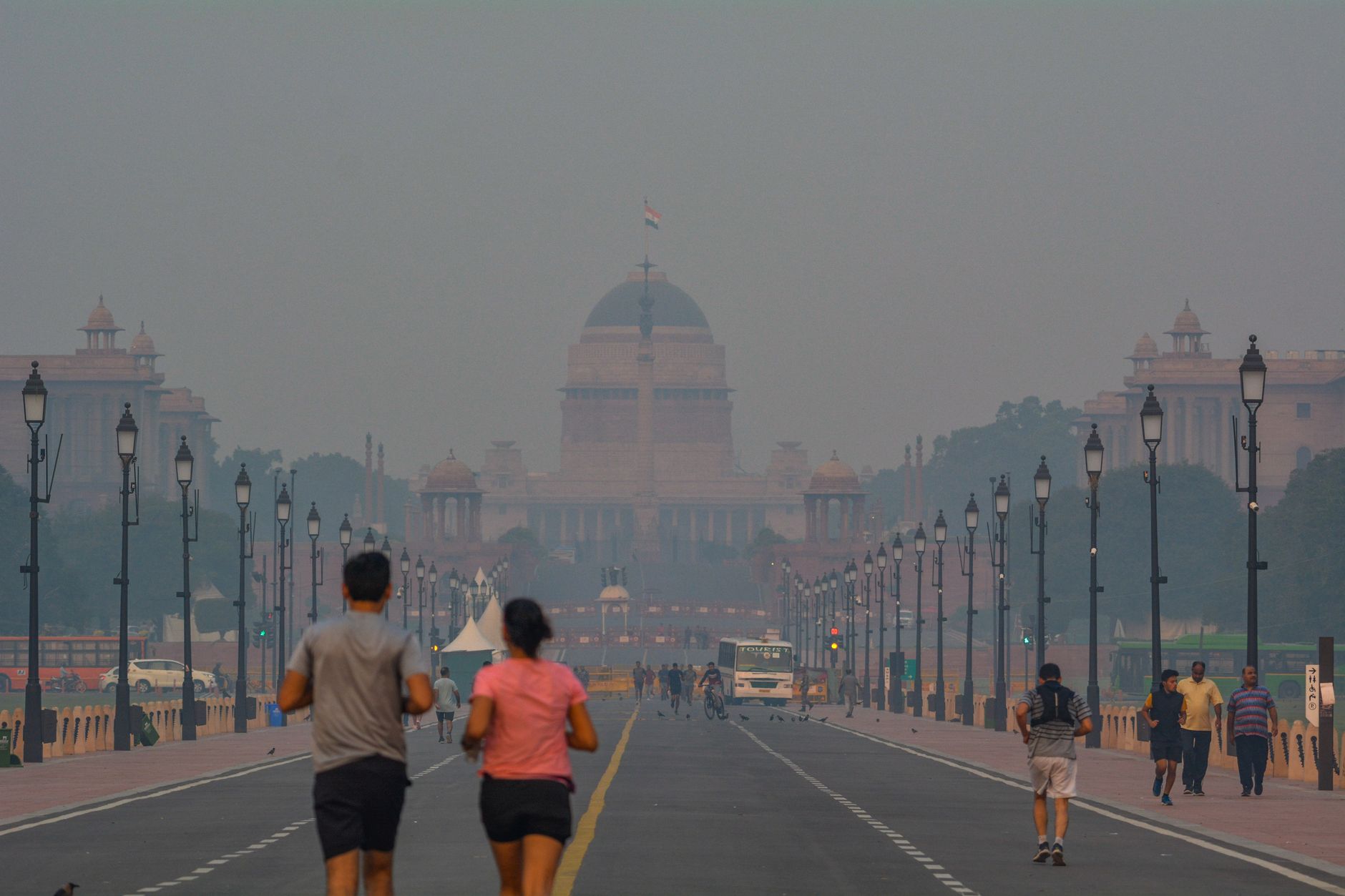
Delhi’s AQI of 324 on November 2 drew on readings from 58 of 59 stations listed by CPCB, whose rules also guide monitor placement.
Delhi’s daily AQI draws on continuous monitoring stations. CPCB sets network sizes by population and specifies how sites should be placed.
Delhi’s AQI was 324 on November 2, calculated from readings available at 58 of the 59 monitoring stations listed in the CPCB’s daily bulletin.
Those continuous stations, or CAAQMS, provide the day-long readings used for the daily AQI and for pollution-control measures under the Graded Response Action Plan. Manual stations work differently: they collect 24-hour samples twice a week.
CPCB’s 2019 framework sets a city’s minimum network by population, using the 2011 Census. A city with more than five million residents should have at least 16 stations, including 12 continuous monitors. Delhi’s stations are run mainly by the Delhi Pollution Control Committee, CPCB, the India Meteorological Department and the Indian Institute of Tropical Meteorology.
Location matters too. The guidelines call for monitors to sit 3-10 metres above ground, at least 20 metres from trees, and in sites open on three of four sides rather than hemmed in by walls or placed beside busy roads.
Elsewhere in NCR, CPCB’s bulletin lists eight stations in Ghaziabad, seven in Noida, four in Gurugram, and three each in Faridabad and Greater Noida. Residents can compare hourly readings station by station.
Latest stories
- Delhi-NCR AQI: How monitor placement shapes daily readings
- Delhi allows certified green crackers only on November 7 and 8
- Bengaluru: Biren Ghose proposes Karnataka Creative Skills Mission
- Bengaluru: Chowdiah Utsava returns with five days of music and craft
- Art Mumbai to bring 94 exhibitors to Mahalaxmi Racecourse from November 12
- Mumbai: Underia Street MPS, Auxiliam Convent win MSSA U-16 titles
- Mumbai: Umar Khute’s 156 gives Anjuman 220-run Harris Shield final lead
- Dahisar: 17 players lead state schools chess championship after four rounds
- Chiaki Maki brings plant-grown colour and handwoven silk to KAASH Bengaluru
- UAS Bengaluru to release 3 crop varieties at GKVK Krishi Mela
- Bengaluru Deepavali traffic: Goraguntepalya may see up to 3,000 buses
- Bengaluru’s Vijay Prakash and Mahathi mark Dhanteras with music
- Bengaluru hosts plan Diwali potlucks before hometown trips
- Gurgaon: Shankar Chowk footbridge gets nod for Rapid Metro link
- Anand Vihar ISBT traffic diversions in place from November 5 to 15
- NODO brings ramen, sushi and dim sum to Khan Market
- Delhi Diwali baithaks bring live music to festive gatherings
- Mumbai vs Railways: Siddhesh Lad on Sarfaraz Khan’s key catch
- Mumbai beat Railways by 106 runs at Brabourne after late bowling turnaround
- Navi Mumbai: NMMT starts Ghansoli-Uttarsiv bus route via Mahape
Cities
- Delhi news
- Gurgaon news
- Noida news
- Greater Noida news
- Ghaziabad news
- Faridabad news
- Delhi NCR news
- Bengaluru news
- Mumbai news
- Navi Mumbai news
- Thane news
Sections
- Top Stories
- Latest
- Politics
- Governance
- Civic Issues
- Transport and Traffic
- Metro
- Roads and Infrastructure
- Weather and Air Quality
- Business and Startups
- Real Estate
- Education
- Health
- Environment
- Courts and Policy
- Safety
- Arts and Culture
- Events
- Things To Do
- Food and Drink
- New Openings
- Shopping
- Nightlife
- Neighbourhoods
- People
- Technology
- Sports
GTK covers the news, people, culture, neighbourhoods, civic life and food shaping India’s cities. Better Starts With Us.