Sanskriti Museum opens at Humayun’s Tomb in Delhi
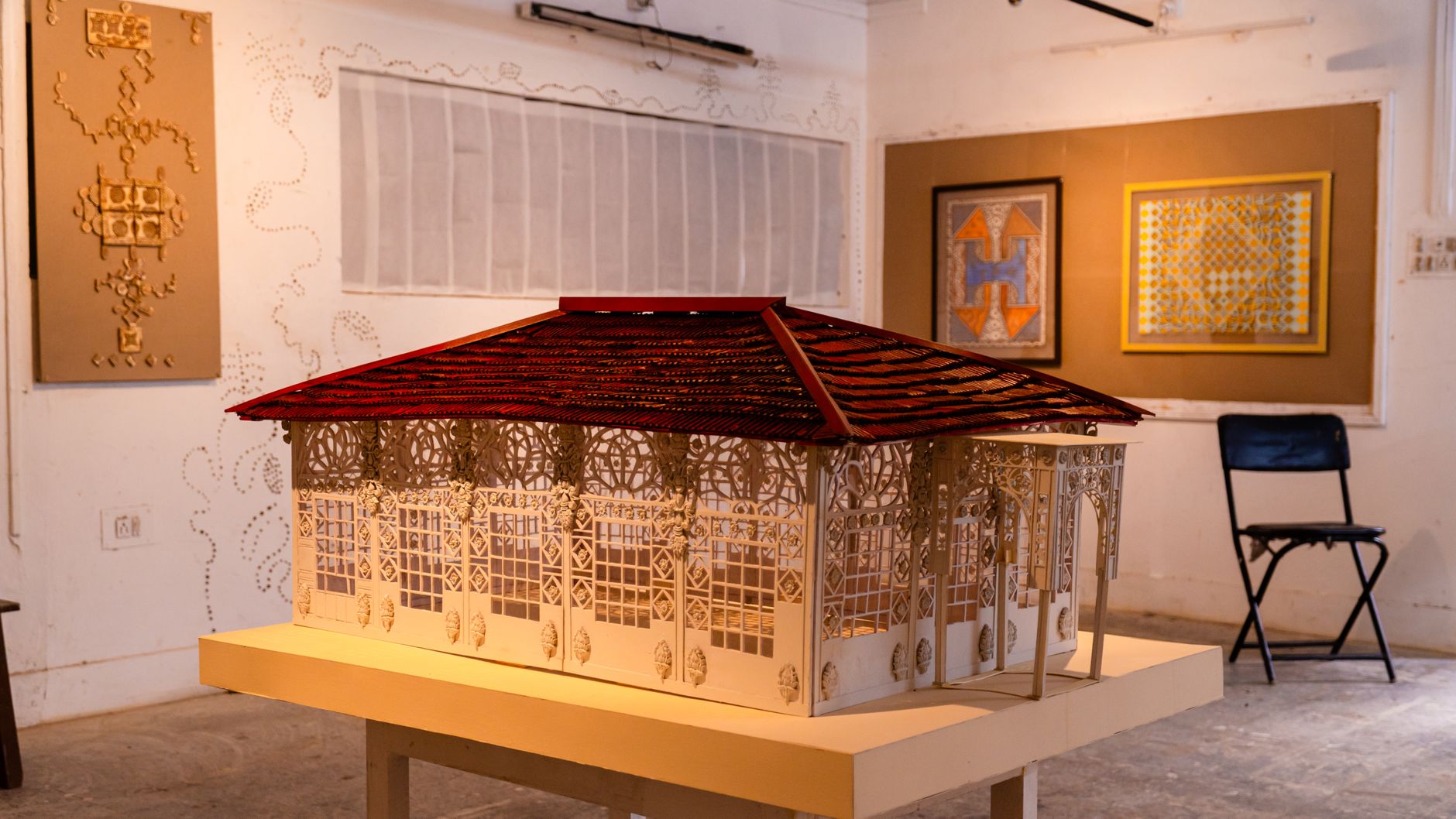
More than 1,000 objects and textiles from OP Jain’s collection are on display at the Sanskriti Museum at Humayun’s Tomb.
The Sanskriti Museum at Humayun’s Tomb displays more than 1,000 everyday objects and textiles from OP Jain’s collection. It is open from 10am to 6pm.
A 19th-century tiger mask and a brass breastplate from Karnataka stand at the entrance of the newly opened Sanskriti Museum of Everyday Art & Indian Textiles at the Humayun’s Tomb World Heritage Site Museum.
The gallery draws on more than 1,000 artefacts and textiles assembled over five decades by OP Jain, founder of the Sanskriti Museums. The Sanskriti Board of Trustees gifted the collection to the Indira Gandhi National Centre for the Arts, while the Aga Khan Trust for Culture designed and executed the display.
Its rooms move through a life cycle: painted wooden walkers and cradles for childhood; ornate pens, ink pots and wooden slates for education; then work tools, kitchen utensils, beauty objects and household boxes. A display of lotas sits alongside objects including betel-nut crackers, lamps, combs, locks and mortar-pestles.
Textiles include Rajasthan’s bandhani, Kashmiri kani shawls, Punjab’s phulkaris and a Baluchari sari border from West Bengal embroidered with “Vande Mataram” in Bengali. Clay horses and elephants from Tamil Nadu’s Ayyanar terracotta tradition are displayed in the courtyard. The museum is open from 10am to 6pm.
Latest stories
- The Blondie House opens in Versova with coffee, matcha and all-day dining
- Delhi’s last red DTC bus withdrawn for scrapping after 15 years
- GMDA hires consultant to link recycled-water pipelines in Gurugram
- Railway Board sanctions trains for Bengaluru Pink Line’s elevated section
- Khalin Joshi takes six-shot lead at Bengaluru Open halfway stage
- MCG gives 24 hours to clear debris from Gurugram public spaces
- Mumbai: S. J. Poddar Academy Grade 6 students curate Zoographia
- Marsh crocodile rescued from 8-foot electricity duct at Aarey Metro complex
- Western Railway says Mumbai division collected 5.2 tonnes in cleanliness drive
- Over 1,000 students exhibit work at Bengaluru children’s biennale
- Delhi to set up 110 collection centres for old and damaged idols
- Mumbai: Nani says The Paradise makers expected an A certificate
- Niranjan Hiranandani shows six-storey Malabar Hill home Kanta
- Mumbai chocolatier makes 75kg chocolate Ganesha idol for Pune
- Heavy vehicles barred on Varthur-Gunjur SH-35 during peak hours
- CSMT inspection: PAC seeks wider north-side entry for evening rush
- Bengaluru Airport T2 hosts ten-day Odia food festival
- Delhi sets up 78 artificial ponds for Ganpati visarjan
- Mahapanchayat backs Gurgaon road-collision accused; biker calls it an attempt to shift the narrative
- Bengaluru Cantonment station redevelopment expected by December 2026
Cities
- Delhi news
- Gurgaon news
- Noida news
- Greater Noida news
- Ghaziabad news
- Faridabad news
- Delhi NCR news
- Bengaluru news
- Mumbai news
- Navi Mumbai news
- Thane news
Sections
- Top Stories
- Latest
- Politics
- Governance
- Civic Issues
- Transport and Traffic
- Metro
- Roads and Infrastructure
- Weather and Air Quality
- Business and Startups
- Real Estate
- Education
- Health
- Environment
- Courts and Policy
- Safety
- Arts and Culture
- Events
- Things To Do
- Food and Drink
- New Openings
- Shopping
- Nightlife
- Neighbourhoods
- People
- Technology
- Sports
GTK covers the news, people, culture, neighbourhoods, civic life and food shaping India’s cities. Better Starts With Us.