Berry Pulav and Borrowed Time
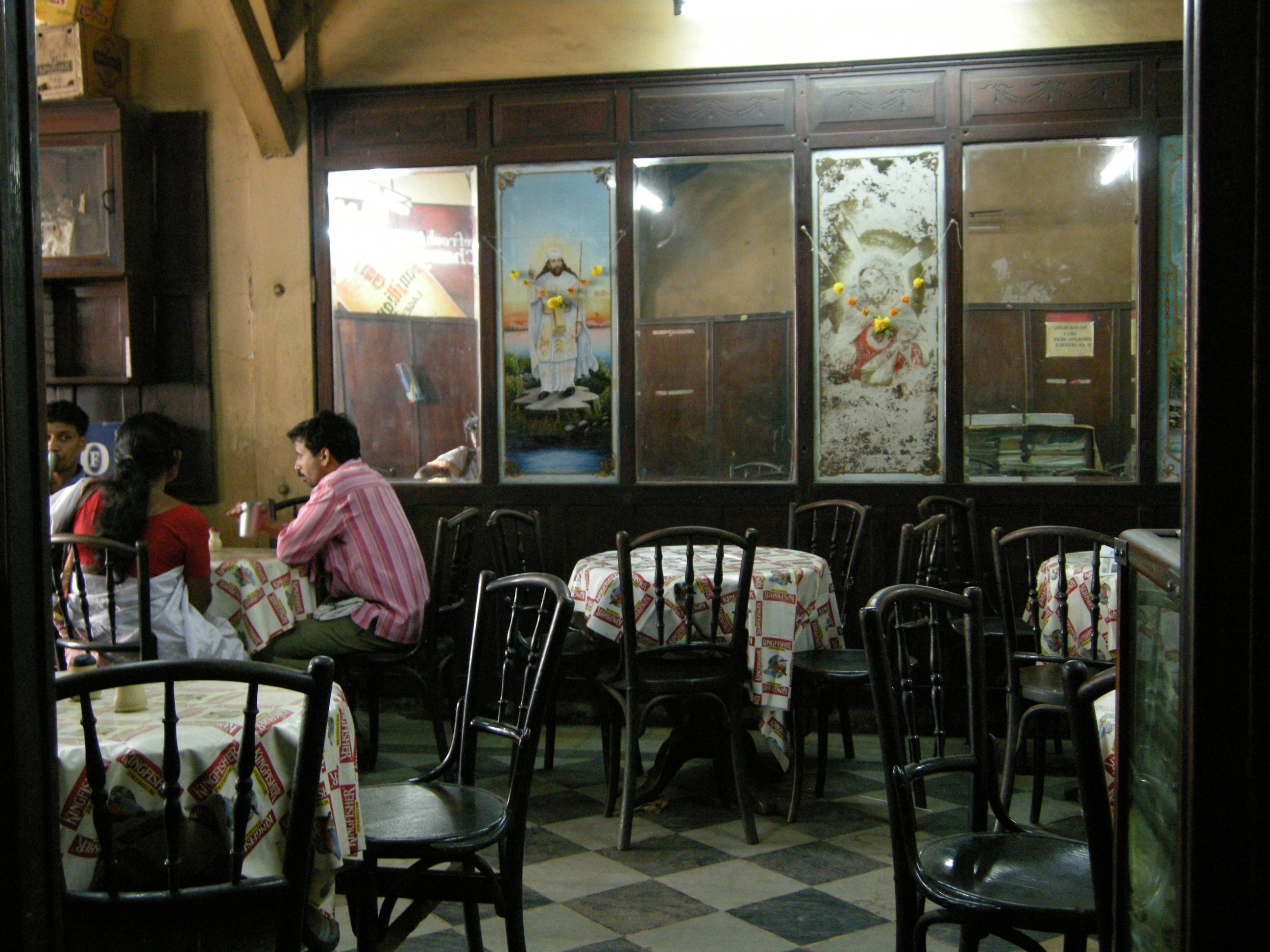
Once, Bombay had hundreds of Irani cafés — places where chai bought you an afternoon and strangers could share a table. Fewer than 30 remain. What’s disappearing with them is more than a way of eating.
Bombay’s Irani cafés were never just about bun-maska, kheema and chai. They were democratic, unhurried spaces shaped by migration, memory and a more plural city. As their numbers dwindle, we look back at what they gave Bombay — and visit a few of the beloved cafés still keeping that culture alive.
If you've never had the silly joy of stepping into one, an Irani café is a small, old-school eatery, usually in Bombay, sometimes Pune or Hyderabad, run for generations by families of Zoroastrian or Shia Iranian descent. Checkered tablecloths, tall mirrors, marble-topped counters, a menu that hasn't changed in decades, and chai whose scent follows you out the door. A dusty, unhurried kind of warmth, like walking into an old friend's home. The Irani café was and remains a site of such, potent nostalgia. It was a marker of an India that wasn't so scared of being pluralist. It was a marker of a Bombay where things didn't move fast just because they had to. We weren't rushing so much, once. A chai didn't just buy us an hour at a table — it bought us so much more. A plate of kheema didn't mean rushing away the moment lunch was done. It was a marker of a time when space in the city wasn't so scarce — when it could really be shared.
The slow loss of these cafés feels like such a big loss because of what they meant to us, and what they did for our city. They weren't just places to eat. They were places where strangers could sit at the same table without needing to know each other, where an hour could stretch into three without anyone minding, where the city's usual hierarchies softened a little over bun-maska and chai.
**A Small History**: Bombay's Irani cafés carried a migration few remember today. It is difficult to imagine now that Iran was once India's neighbour, its people arriving to build something that would outlast the borders that later closed between them.
Zoroastrian migrants from Iran arrived in Bombay through the 19th and early 20th centuries, many fleeing persecution and hardship at home. They found in the city a foothold, and over time, a distinct identity — one part Persian, one part Bombay, wholly its own. The cafés they opened were modest: a few tables, tall mirrors, marble-topped counters, a menu that rarely changed. But they became something larger — a kind of neutral ground in a city otherwise carved up by religion, caste, and class.
At their peak, there were about 350 Irani cafés in the city, most run by Zoroastrians, with roughly 15% run by Shias. Today, fewer than 30 remain. Rising rents and changing food habits have played their part — but so has something less tragic: the next generation moving into other, more lucrative professions. Not every closure is a loss in the purest sense; some reflect real mobility for the families who once ran these spaces. A handful have also adapted rather than shut, modernising menus and leaning into their heritage appeal for a newer, Instagram-inclined crowd.
Still, each closure takes with it a small archive of the city's social history — arguments settled over tea, first dates in a corner booth, regulars who never had to order because the uncle behind the counter already knew.
**What We Still Have**: To celebrate my pained nostalgia for a time when I could dream of a less complicated Bombay, here's a list of some of my favourite Irani cafés. Let's try to keep at least these alive — not necessarily frozen exactly as they are, but alive enough that this culture, shared with us, isn't lost for good.
**Café Irani Chai**: The first thing I think of when I remember this café is the crowd pouring in after the rainiest CJP protest day. Everyone had run here once the police called it off. It was warm, busy, and the mutton kheema was lined so perfectly, and surprisingly, with so much mint. One of my favourites to return to. Note: I had a solo-eater-friendly experience!
**Kyani & Co**: Iconic. We've been coming here for longer than we can remember. The food is easy, the ceilings are tall, and the uncles who bill and serve are familiar. There's a comfort in knowing exactly what you'll get here, every single time. I hope it stays forever. Note: In a 2007 interview, longtime owner Aflatoon Khodadad Shokriye reflected on handing the café to his sons, saying simply, "any moment I may leave to go." He passed away a few years later — but Kyani, and his family, and food, are still here.
**Britannia**: No photos allowed, but so much nostalgia. Varied menu, delicious sodas, and plenty of cats wandering between tables like they own the place — which, in a way, they do. Always love it here. Maybe my favourite berry pulav in the city, and worth the wait even on a busy afternoon.
**Café Military**: Come for the chai or bread and kheema, stay for the beer. Yes — beer, in an Irani café! I always love walking in here if I'm in the Fort area, especially on a slow weekday when the light comes in just right through the old windows. Note: they weren't thrilled that I was nursing my beer and reading — but I always go back anyway. Like family, ha!
Latest stories
- GMDA hires consultant to link recycled-water pipelines in Gurugram
- Railway Board sanctions trains for Bengaluru Pink Line’s elevated section
- Khalin Joshi takes six-shot lead at Bengaluru Open halfway stage
- MCG gives 24 hours to clear debris from Gurugram public spaces
- Mumbai: S. J. Poddar Academy Grade 6 students curate Zoographia
- Marsh crocodile rescued from 8-foot electricity duct at Aarey Metro complex
- Western Railway says Mumbai division collected 5.2 tonnes in cleanliness drive
- Over 1,000 students exhibit work at Bengaluru children’s biennale
- Delhi to set up 110 collection centres for old and damaged idols
- Mumbai: Nani says The Paradise makers expected an A certificate
- Niranjan Hiranandani shows six-storey Malabar Hill home Kanta
- Mumbai chocolatier makes 75kg chocolate Ganesha idol for Pune
- Heavy vehicles barred on Varthur-Gunjur SH-35 during peak hours
- CSMT inspection: PAC seeks wider north-side entry for evening rush
- Bengaluru Airport T2 hosts ten-day Odia food festival
- Delhi sets up 78 artificial ponds for Ganpati visarjan
- Mahapanchayat backs Gurgaon road-collision accused; biker calls it an attempt to shift the narrative
- Bengaluru Cantonment station redevelopment expected by December 2026
- Railways approves ₹497 crore to double Chouk–Karjat line
- Delhi Metro logs record 82.45 lakh boardings during DTC strike
Cities
- Delhi news
- Gurgaon news
- Noida news
- Greater Noida news
- Ghaziabad news
- Faridabad news
- Delhi NCR news
- Bengaluru news
- Mumbai news
- Navi Mumbai news
- Thane news
Sections
- Top Stories
- Latest
- Politics
- Governance
- Civic Issues
- Transport and Traffic
- Metro
- Roads and Infrastructure
- Weather and Air Quality
- Business and Startups
- Real Estate
- Education
- Health
- Environment
- Courts and Policy
- Safety
- Arts and Culture
- Events
- Things To Do
- Food and Drink
- New Openings
- Shopping
- Nightlife
- Neighbourhoods
- People
- Technology
- Sports
GTK covers the news, people, culture, neighbourhoods, civic life and food shaping India’s cities. Better Starts With Us.