Beyond Gurugram’s office towers, a map of its temple spires
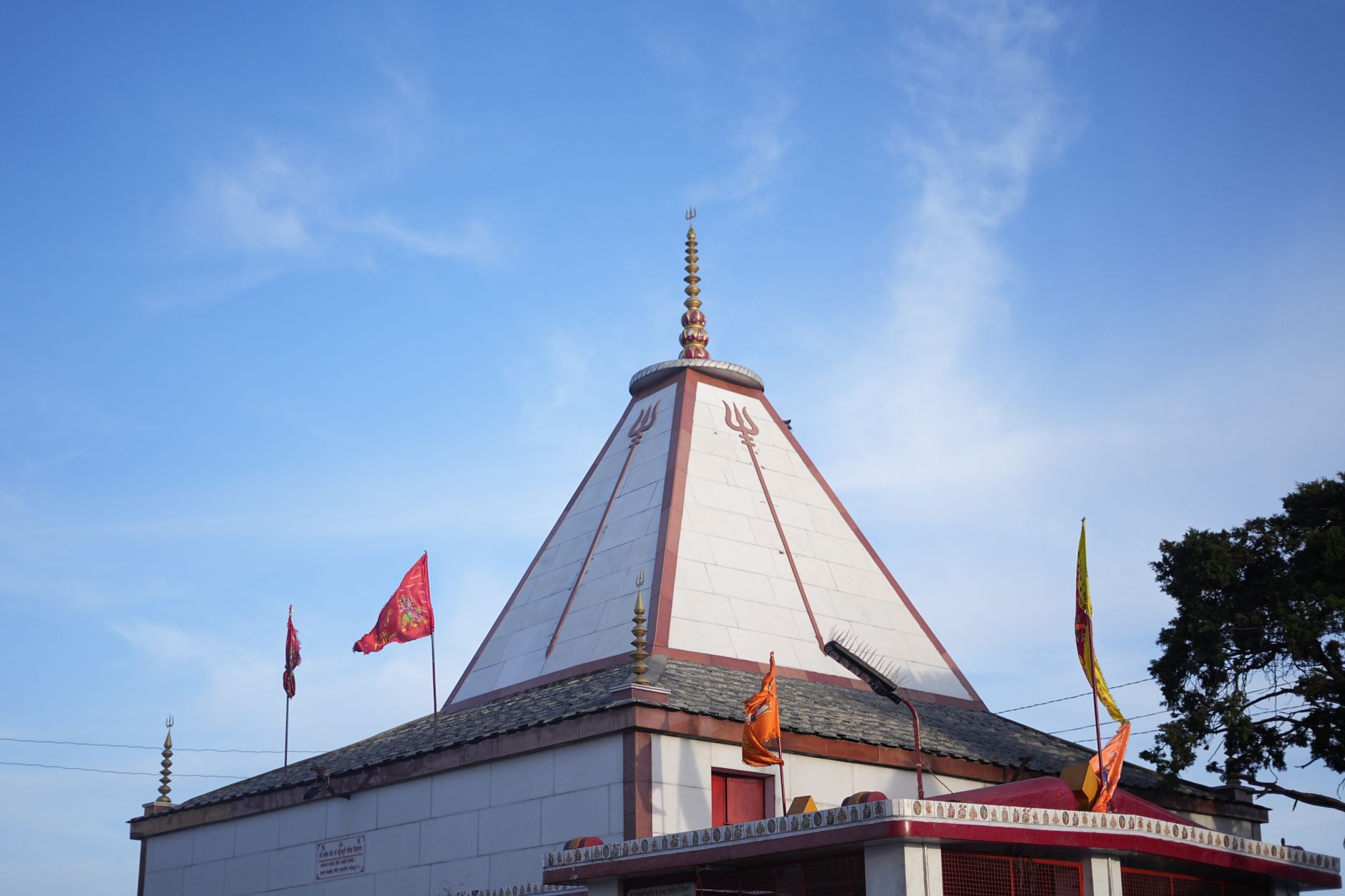
From Kabir in Sadar Bazar to a hilltop shrine above Ghata village, Gurugram’s older religious spaces sit amid the city’s rapid-built skyline.
Gurugram’s temples offer a counterpoint to the office blocks and malls that dominate its public image. Several shrines retain courtyards, mature trees and architectural details that connect neighbourhood life with the city’s older settlements.
The names of Shree Roopchand Advocate and Srimati Champa Devi are cut into marble at Kabir Mandir in Gurugram’s Sadar Bazar, alongside their donations of ₹75,000 and ₹2,121. Inside, the 15th-century poet-saint’s idol sits in a white-tiled chamber behind iron grilles, with yellow flowers and a sun painted on the wall.
The temple is one stop in a network of religious spaces that runs through the Millennium City’s crowded older neighbourhoods and newer sectors. A short walk away, Radha Krishna Mandir stands in a courtyard ringed by homes. Its walls have taaks, the recessed niches of older local architecture, while a gallery circles the central shrine and a velvet crib is kept for baby Krishna.
Courtyards and trees
Guru Ravidas Temple, also in Sadar Bazar, has a broad courtyard and a peepal tree rising through its roof. Sacred red kalava threads wind around the trunk, which shelters a black idol of Shani Devta. In Sector 14, daylight through the jaalis at Shree Krishna Mandir casts patterned shadows across the floor; a neem stands in its unusually large courtyard.
At Parshvanath Digambar Jain Temple in Rakabpura, glass tiles cover the ceiling around a central chandelier. Wall paintings depict Jain religious scenes, and the lower-level meditation chamber is generally quiet.
A view from Ghata
Bani Mandir sits on a hill above Ghata village. Its shrines occupy a small plateau reached by a climb, with the village’s houses, lanes, courtyards and buffaloes below. Beyond them, Gurugram’s commercial towers appear through the haze.
Sheetla Mata Temple remains a destination for families seeking blessings for unwell children. Pilgrims had long travelled to the town with sick children, drawn by the traditional belief that the goddess cures fevers, including smallpox.
The city’s newer towers may dominate the horizon, but these courtyards, trees and spires remain part of Gurugram’s everyday map.
Latest stories
- The Blondie House opens in Versova with coffee, matcha and all-day dining
- Delhi’s last red DTC bus withdrawn for scrapping after 15 years
- GMDA hires consultant to link recycled-water pipelines in Gurugram
- Railway Board sanctions trains for Bengaluru Pink Line’s elevated section
- Khalin Joshi takes six-shot lead at Bengaluru Open halfway stage
- MCG gives 24 hours to clear debris from Gurugram public spaces
- Mumbai: S. J. Poddar Academy Grade 6 students curate Zoographia
- Marsh crocodile rescued from 8-foot electricity duct at Aarey Metro complex
- Western Railway says Mumbai division collected 5.2 tonnes in cleanliness drive
- Over 1,000 students exhibit work at Bengaluru children’s biennale
- Delhi to set up 110 collection centres for old and damaged idols
- Mumbai: Nani says The Paradise makers expected an A certificate
- Niranjan Hiranandani shows six-storey Malabar Hill home Kanta
- Mumbai chocolatier makes 75kg chocolate Ganesha idol for Pune
- Heavy vehicles barred on Varthur-Gunjur SH-35 during peak hours
- CSMT inspection: PAC seeks wider north-side entry for evening rush
- Bengaluru Airport T2 hosts ten-day Odia food festival
- Delhi sets up 78 artificial ponds for Ganpati visarjan
- Mahapanchayat backs Gurgaon road-collision accused; biker calls it an attempt to shift the narrative
- Bengaluru Cantonment station redevelopment expected by December 2026
Cities
- Delhi news
- Gurgaon news
- Noida news
- Greater Noida news
- Ghaziabad news
- Faridabad news
- Delhi NCR news
- Bengaluru news
- Mumbai news
- Navi Mumbai news
- Thane news
Sections
- Top Stories
- Latest
- Politics
- Governance
- Civic Issues
- Transport and Traffic
- Metro
- Roads and Infrastructure
- Weather and Air Quality
- Business and Startups
- Real Estate
- Education
- Health
- Environment
- Courts and Policy
- Safety
- Arts and Culture
- Events
- Things To Do
- Food and Drink
- New Openings
- Shopping
- Nightlife
- Neighbourhoods
- People
- Technology
- Sports
GTK covers the news, people, culture, neighbourhoods, civic life and food shaping India’s cities. Better Starts With Us.