Delhi Police defends facial recognition use at NEET-UG protests before Supreme Court
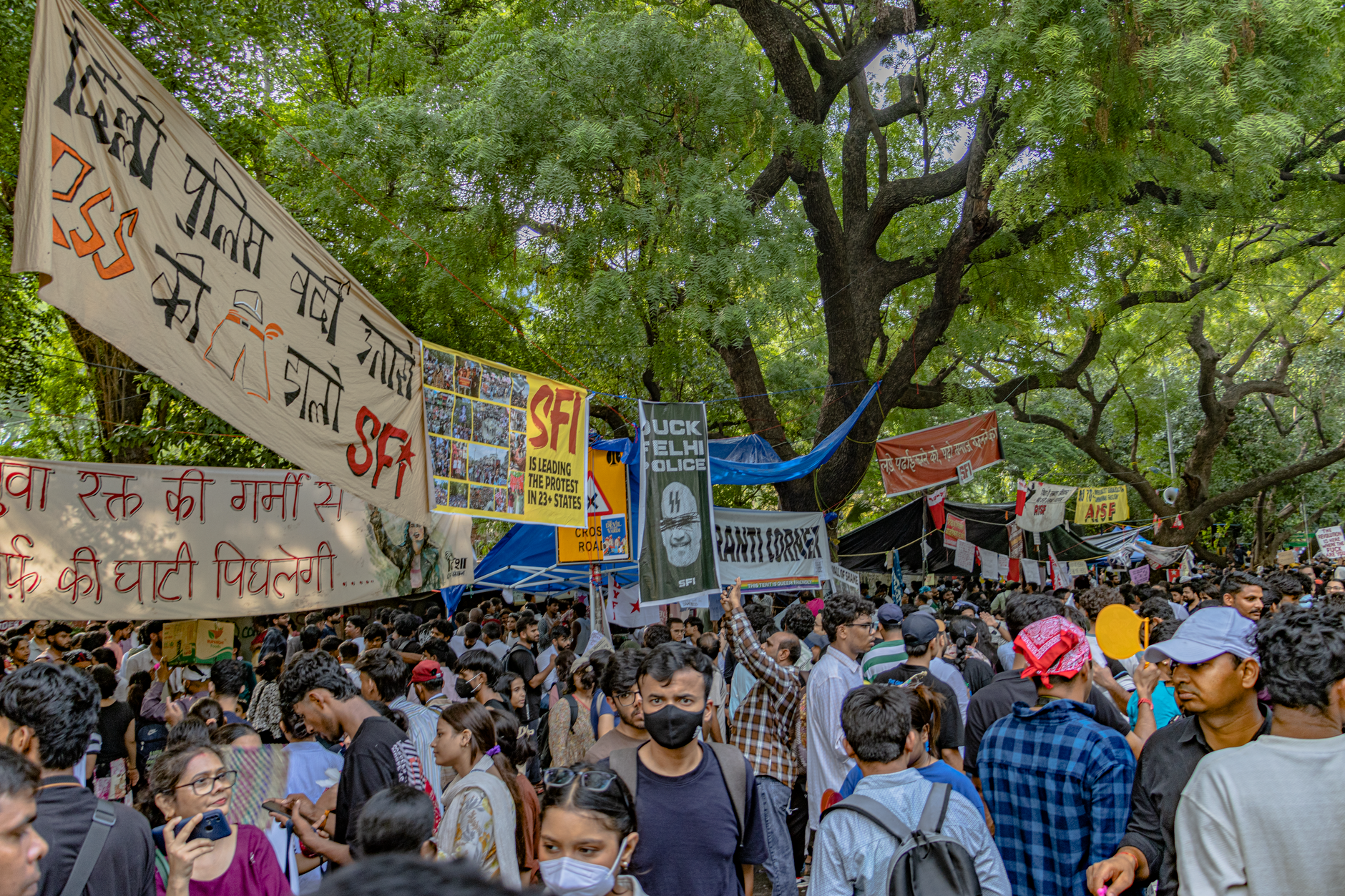
Delhi Police told the Supreme Court that facial recognition technology used during the NEET-UG protests served a “legitimate State interest” and was not deployed for indiscriminate surveillance of peaceful demonstrators.
In an affidavit, police defended their crowd-control response at Jantar Mantar and said force was used proportionately in a fast-moving law-and-order situation. The Supreme Court is expected to examine allegations against police personnel through a proposed committee looking at the use of force.
Delhi Police has told the Supreme Court that it used facial recognition technology during the NEET-UG paper-leak protests in Delhi as a “legitimate, bona fide and proportionate policing measure”.
In its affidavit, the force said the system does not automatically create or retain profiles of everyone at a protest site, and is not meant to collect personal information from peaceful protesters unless a person has a previous criminal record. Police said its records cover people accused in serious offences, rather than minor matters such as traffic challans. It said the system identified 2,873 people with serious criminal antecedents; 92 of them were involved in more than 10 cases, including 47 identified as history-sheeters.
The affidavit also defended the police response to the July 20 protests at Jantar Mantar, where the NEET-UG agitation had continued beyond a demonstration initially permitted for June 20. Police said tear-smoke shells were used only as a last resort and that the lathi charge was limited and controlled. It denied using “nail lathis”, manhandling women protesters, and indiscriminate data collection.
The force did not specifically address allegations concerning pellet-gun use. It said allegations against officers would be dealt with before the Supreme Court’s proposed committee examining police use of force. Jantar Mantar remains Delhi’s designated protest stretch, though the court has also sought the city’s response on an alternative protest site.
Latest stories
- The Blondie House opens in Versova with coffee, matcha and all-day dining
- Delhi’s last red DTC bus withdrawn for scrapping after 15 years
- GMDA hires consultant to link recycled-water pipelines in Gurugram
- Railway Board sanctions trains for Bengaluru Pink Line’s elevated section
- Khalin Joshi takes six-shot lead at Bengaluru Open halfway stage
- MCG gives 24 hours to clear debris from Gurugram public spaces
- Mumbai: S. J. Poddar Academy Grade 6 students curate Zoographia
- Marsh crocodile rescued from 8-foot electricity duct at Aarey Metro complex
- Western Railway says Mumbai division collected 5.2 tonnes in cleanliness drive
- Over 1,000 students exhibit work at Bengaluru children’s biennale
- Delhi to set up 110 collection centres for old and damaged idols
- Mumbai: Nani says The Paradise makers expected an A certificate
- Niranjan Hiranandani shows six-storey Malabar Hill home Kanta
- Mumbai chocolatier makes 75kg chocolate Ganesha idol for Pune
- Heavy vehicles barred on Varthur-Gunjur SH-35 during peak hours
- CSMT inspection: PAC seeks wider north-side entry for evening rush
- Bengaluru Airport T2 hosts ten-day Odia food festival
- Delhi sets up 78 artificial ponds for Ganpati visarjan
- Mahapanchayat backs Gurgaon road-collision accused; biker calls it an attempt to shift the narrative
- Bengaluru Cantonment station redevelopment expected by December 2026
Cities
- Delhi news
- Gurgaon news
- Noida news
- Greater Noida news
- Ghaziabad news
- Faridabad news
- Delhi NCR news
- Bengaluru news
- Mumbai news
- Navi Mumbai news
- Thane news
Sections
- Top Stories
- Latest
- Politics
- Governance
- Civic Issues
- Transport and Traffic
- Metro
- Roads and Infrastructure
- Weather and Air Quality
- Business and Startups
- Real Estate
- Education
- Health
- Environment
- Courts and Policy
- Safety
- Arts and Culture
- Events
- Things To Do
- Food and Drink
- New Openings
- Shopping
- Nightlife
- Neighbourhoods
- People
- Technology
- Sports
GTK covers the news, people, culture, neighbourhoods, civic life and food shaping India’s cities. Better Starts With Us.