Delhi's Roads Always Taken, Never Spoken Of
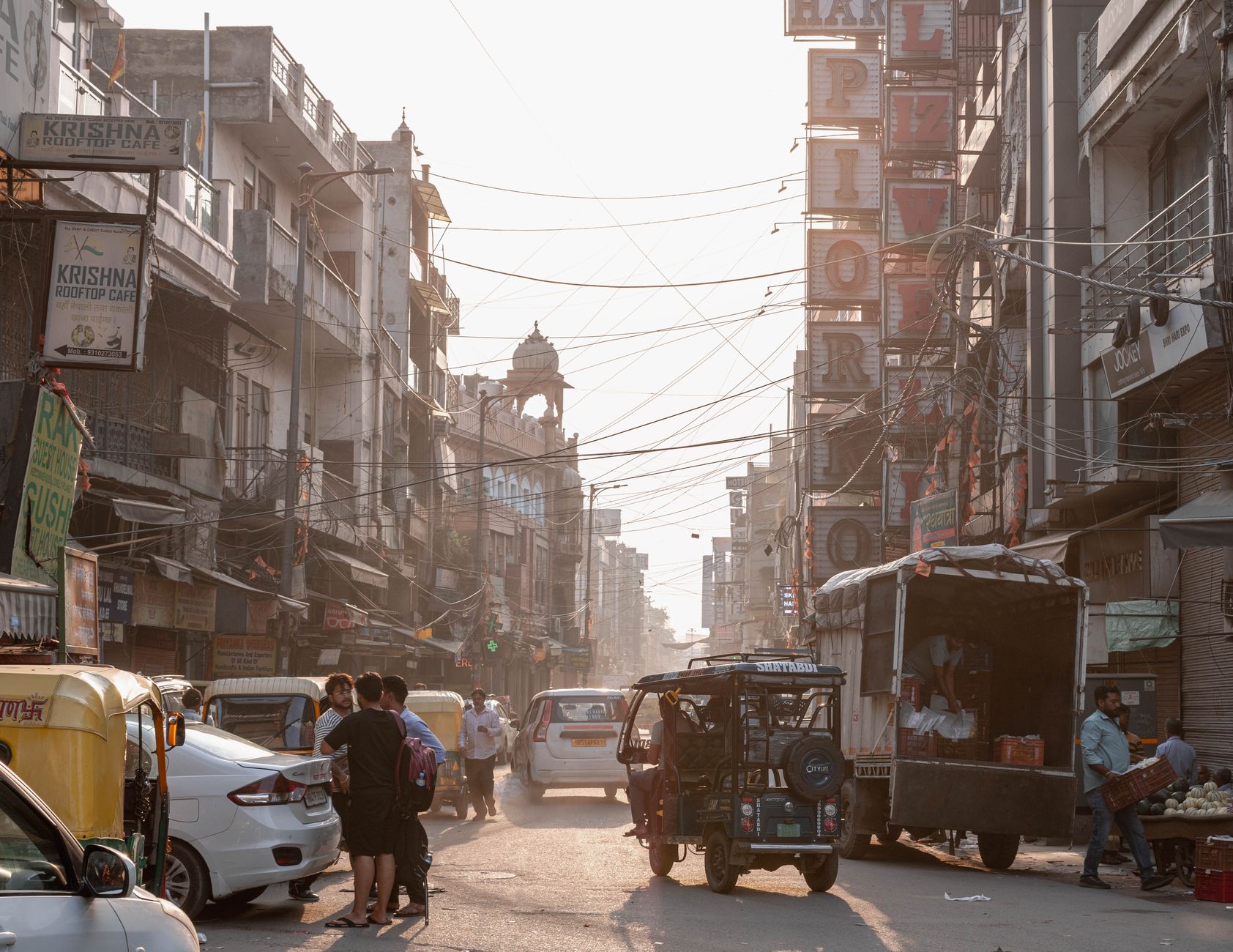
On the roads of Delhi named after Cold War statesmen, the diplomat who invented an entire neighborhood on a whim, and why the man who started the whole movement never got a road of his own.
Delhi’s road signs are hiding stories in plain sight. From Cold War allies to diplomatic ideals, the names we drive past every day reveal a fascinating history of India’s politics, friendships and place in the world.
To anyone who has had the pleasure of bathing their youth in the sunlight of Delhi, they will always have a story to tell, or a sweet corner to introduce you to. It could be anything from a whimsy tapri to an underrated diner that serves the best parathas or momos. Every crossroad of this jubilant city has its own unique, or frankly insane, story to tell, one that can leave you holding a long thread of emotions you didn't know you were carrying. Unlike the usual romanticism of the road not taken, let's delve into the roads of the capital we walk past every day but are strangely aloof to the history of their naming.
The Road That Arrived with a Summit:
Here's a fun one to start you off: somewhere in the leafy hush of Chanakyapuri, there's a road called Kwame Nkrumah Marg, and most people who drive down it couldn't tell you who Nkrumah was if their life depended on it. Ghana's first president, as it happens, the man who told the British empire to pack its bags in 1957 and meant it. His road wasn't some colonial hand-me-down either. It landed on the map in 1983, the same year Delhi hosted the mother of all Non-Aligned Movement summits, four thousand-odd dignitaries descending on the city like the world's most polite invasion. Indira Gandhi wanted the city looking sharp for the cameras. Lieutenant Governor Jagmohan's men were out relighting streets and reshaping roads in the run-up, basically giving Delhi a facial before its close-up. And somewhere in that scramble, a slice of asphalt near the African embassies got handed Nkrumah's name, forever.
A Tale of Two Decades:
Now here's where it gets interesting, because Chanakyapuri itself has two very different personalities depending on which decade of it you're standing in. The bones of the place go back to around 1950, when the CPWD carved this enclave out of a village and Nehru, who was, let's not forget, also playing foreign minister on the side, decided every embassy road should wear India's diplomatic philosophy like a name tag. So you get Shanti Path (peace), Niti Marg, Nyaya Marg, Satya Marg, a whole Panchsheel fever dream stitched into the tarmac. Sanskrit virtues, basically, doing PR for a newborn nation. Very earnest, very 1950s, very "we are a civilization of statecraft, thank you for noticing."
Then the Cold War barged in like an uninvited guest who eats all the good snacks, and by the eighties the naming got a lot more geopolitical and a lot less poetic. That's when the foreign strongmen, sorry, statesmen, started getting streets.
Marshals, Presidents, and one Conspicuous Absence:
Josip Broz Tito, Yugoslavia's marshal turned mythmaker, ended up with a road slicing through South Delhi near Kalkaji, crossing paths, quite literally, with a road named for Gamal Abdel Nasser, Egypt's answer to Tito in the swagger department. Both roads went up sometime in the early eighties. Tito's shortly after he died in 1980, Nasser's a full decade after his own death, because apparently Delhi runs on its own delightfully unbothered clock.
And if you're now wondering where Sukarno fits into all this, Indonesia's founding father, chief guest at India's very first Republic Day in 1950, practically a founding member of the whole non-aligned gang, the answer is: nowhere. There is, as far as anyone can tell, no Sukarno road in Delhi. Rabat has one. Ankara has one. Delhi, somehow, forgot to invite him to the party it named after his own movement. Make of that what you will.
An Irony Too Neat for Fiction:
And then there's Ho Chi Minh Marg, tucked into South Delhi near Hauz Khas, threading past Chirag Dilli and Panchsheel Enclave like it's just another local. Uncle Ho, as the Vietnamese still call him with real tenderness, got not one but two Indian roads to his name. Kolkata beat Delhi to the punch by a couple of decades, and in a twist that feels almost too neat for fiction, Kolkata's Ho Chi Minh Sarani sits right next to the American Consulate. Somewhere, somebody's sense of irony is having the time of its life.
The Name That Was Basically a Guess:
But if you want the story that actually made me sit up, it's not about a leader at all, it's about the enclave's name itself. Chanakyapuri wasn't cooked up in some grand committee stacked with historians and town planners solemnly weighing India's civilizational legacy. It was, by most accounts, a young officer in his twenties, barely out of the gate at the Ministry of External Affairs, who tossed the name "Chanakyapuri" into a naming meeting almost as an aside, after "Diplomatic Enclave" and "Kautilya Nagar" got shot down for being either too bland or too on-the-nose. The chief of protocol liked it. Nehru liked it. And that was that: a whole diplomatic quarter, and by extension a permanent slice of how the world sees India's ancient statecraft, hinging on one confident guess in a room full of adults. That officer, incidentally, went on to become India's Foreign Secretary. Imagine peaking that early and not even realizing it at the time.
A Lenin in the Park:
There's a stranger footnote too, if you wander into Nehru Park on the right afternoon. A two-and-a-half-metre bronze Lenin, planted there in 1987 to mark seventy years of the Soviet Union, unveiled with Rajiv and Sonia Gandhi in attendance like it was the most normal thing in the world. The plaque explaining any of this has since gone missing, the way plaques in Delhi tend to. But the Communist Party still shows up every year on Lenin's birthday to pay respects to a statue most joggers walk past without a second glance, blissfully unaware they're circling a piece of Cold War theatre mid-cardio.
The Fossil Record Under your Tyres:
And that, really, is the whole charm of it. Delhi doesn't announce its history, it buries it in road signs and roundabouts and lets you trip over it by accident. What looks like a random tangle of Margs is actually a fossil record of who India wanted to stand beside when the world was busy picking sides. So the next time your cab crawls past Nasser Marg or cuts across Tito Marg on the way to somewhere far less interesting, take a second. You're not just stuck in traffic. You're driving through somebody's very deliberate, very Cold War, occasionally very whimsical idea of solidarity, one green signboard at a time.
Latest stories
- Delhi’s last red DTC bus withdrawn for scrapping after 15 years
- GMDA hires consultant to link recycled-water pipelines in Gurugram
- Railway Board sanctions trains for Bengaluru Pink Line’s elevated section
- Khalin Joshi takes six-shot lead at Bengaluru Open halfway stage
- MCG gives 24 hours to clear debris from Gurugram public spaces
- Mumbai: S. J. Poddar Academy Grade 6 students curate Zoographia
- Marsh crocodile rescued from 8-foot electricity duct at Aarey Metro complex
- Western Railway says Mumbai division collected 5.2 tonnes in cleanliness drive
- Over 1,000 students exhibit work at Bengaluru children’s biennale
- Delhi to set up 110 collection centres for old and damaged idols
- Mumbai: Nani says The Paradise makers expected an A certificate
- Niranjan Hiranandani shows six-storey Malabar Hill home Kanta
- Mumbai chocolatier makes 75kg chocolate Ganesha idol for Pune
- Heavy vehicles barred on Varthur-Gunjur SH-35 during peak hours
- CSMT inspection: PAC seeks wider north-side entry for evening rush
- Bengaluru Airport T2 hosts ten-day Odia food festival
- Delhi sets up 78 artificial ponds for Ganpati visarjan
- Mahapanchayat backs Gurgaon road-collision accused; biker calls it an attempt to shift the narrative
- Bengaluru Cantonment station redevelopment expected by December 2026
- Railways approves ₹497 crore to double Chouk–Karjat line
Cities
- Delhi news
- Gurgaon news
- Noida news
- Greater Noida news
- Ghaziabad news
- Faridabad news
- Delhi NCR news
- Bengaluru news
- Mumbai news
- Navi Mumbai news
- Thane news
Sections
- Top Stories
- Latest
- Politics
- Governance
- Civic Issues
- Transport and Traffic
- Metro
- Roads and Infrastructure
- Weather and Air Quality
- Business and Startups
- Real Estate
- Education
- Health
- Environment
- Courts and Policy
- Safety
- Arts and Culture
- Events
- Things To Do
- Food and Drink
- New Openings
- Shopping
- Nightlife
- Neighbourhoods
- People
- Technology
- Sports
GTK covers the news, people, culture, neighbourhoods, civic life and food shaping India’s cities. Better Starts With Us.