From Kashmir to Delhi - Ali Safuddin is the Sound of Kashmir and Beyond!
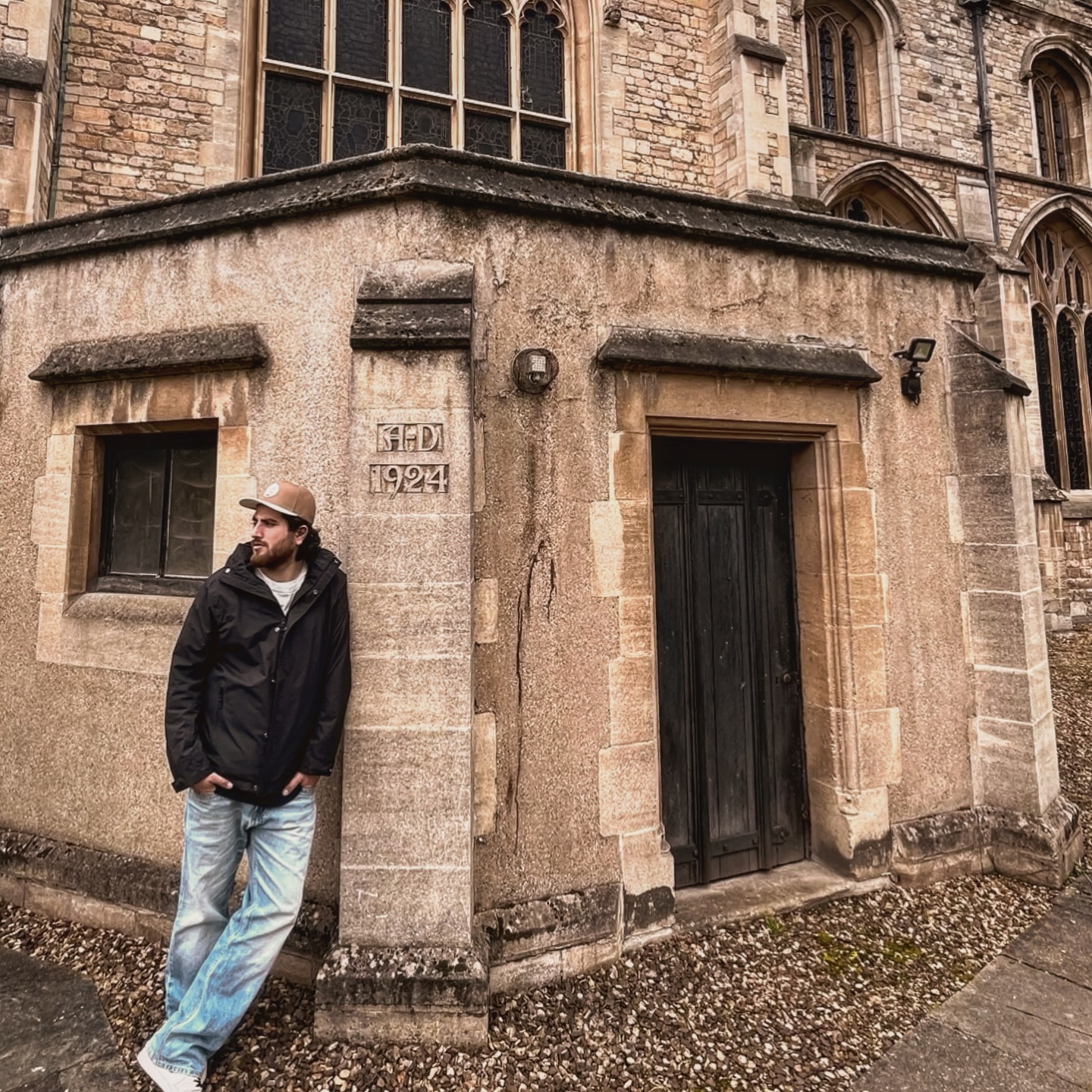
Blending Kashmiri folk with rock and poetry, Ali Saffudin gives inherited songs a new life. For Kashmiris living in Delhi, his music offers a way back to language, memory and belonging—and turns a crowded club into somewhere that feels like home.
A chance encounter with Ali Saffudin’s music reconnects a second-generation Kashmiri immigrant with the songs of childhood. Following his journey through folk, blues and rock, this piece explores how his music carries cultural memory across distances. In Delhi, where Kashmiri students and listeners gather at his gigs, these songs become a shared expression of identity, remembrance and home.
The first time I chanced upon Ali Saffudin’s music was by chance on a beautiful corner of the internet. Cholhama Roshay, a popular Kashmiri folk song recalled by a Kashmiri as easily as a lullaby had been rendered fresh for a younger audience. The same old song passed like an heirloom from one to another in Kashmir had derived a newer audience on the internet.
He was performing it as part of a series called Dal Sessions. I, myself, was no stranger to Kashmiri language. For the second-generation Kashmiri immigrant in me he opened doors to a different way of embracing that same old song. I had no touch with my language yet Ali’s rendering of the song my mother had sung to me in childhood evoked a strong emotional response.
In 2008, during a shutdown propelled by Amarnath Row, Ali started composing on guitar. He came to study at Delhi University and that exposed him to newer genres. He desired to make a new sound of ‘rock and roll’ – one that could combine rock, koshur-folk, poetry, politics, philosophy, spirituality.
In Delhi, Ali used to spend time at Overdrive, a studio in Lajpat Nagar, he hung out there and learnt a lot. He however chose to return to Kashmir.
There was a period in his life when he was absolutely immersed in blues. “I understood the essence of it. They’re singing about their plight. I took the essence of blues and found it somewhere in my Kashmiri folk.”
He felt that rabab and other folk instruments from Kashmir were used ornamentally in movies but he wished to evade that. Irtiqa, his recent EP brings together masters of Kashmiri folk instruments together. It is a habit that stretches out from his earlier music to the latest, and even onto his live shows in Delhi.
Ali jokes about that time when he pulled his guitar out in front of Rashid Hafiz, a legendary Kashmiri Sufi artist who thought it was a toy. But Ali notes unflinchingly ‘if Pink Floyd is cool then Kashmiri folk is cool because it is just as deeply intricate.’
The depth rests everywhere in his discography. On songs such as Sonay Do there is a darkness hard to explain through words. Ali recounts that it was recorded in a single take in a studio during a time of despair. You can hear his sighs.
Zehni Ghulami is the most powerful of his oeuvre, part of Wolivo released via Azadi Records and translates literally to mental slavery. It is a self-critical song. ‘The struggle of man against power is the struggle of memory against forgetting.’ Kundera writes in Ignorance. In Ali’s music remembrance itself becomes the most political act of all.
…

When a community migrates it carries its culture in the form of memorabilia: language and music are the easiest to carry. Ali’s music is a collective archive for many in the city. An entire community of Kashmiri students in Delhi’s Jamia University, DU and beyond embrace his music as a part of their pride and narrative.
Umer Mukhtar, a Kashmiri who lives and works in Delhi, talks highly about Ali. “He’s made from the streets of Kashmir. Being away from home when I listen to his music or watch his videos it gives me nostalgia: I feel I am at home.” Listeners such as Umer are instrumental in spreading Ali’s music to their other friends in Delhi.
At his concerts in Delhi’s Summerhouse Cafe, the vibe is almost immaculate. The audience sings back, doesn’t shout, eventually they take to placing themselves to sit on the floor of the club in a manner resembling a Kashmiri family sitting beside a dastarkhān for dinner.
The scene is unlike any average club night in Delhi, especially a club packed to the full. “It is homely. It doesn’t matter if it is Summerhouse or somewhere else. It becomes home.” Umer recounts his experience of the gig.
For the final song of his setlist, Ali always sings Inqalab-o-Inqalab, a powerful opus composed in three parts. First, Inqalab-o-Inqalab, a poem by Kashmiri poet Abdul Ahad Azad. Second, Get Up, Stand Up, the Bob Marley classic. Finally, Meri Awaaz Suno, an anthem from Junoon, the legendary Pakistani act. The song is covered widely by students of Jamia and DU during protests.
Ali’s song 'Hamesha Der Kar Deta Hoon', a reinterpretation of Pakistani Poet Munir Niazi's couplet, is about missed opportunities, delayed actions, and the pain of realising things too late.
The second-generation Kashmiri immigrant in me always felt it was too late to learn my language but chancing upon the music of Ali became an archival of my culture. There is a whole generation of Kashmiris and beyond that his music is touching. He is a hero to an entire generation’s understanding of conflict through his storytelling. No delay in that and no missed opportunities either.
Latest stories
- Delhi’s last red DTC bus withdrawn for scrapping after 15 years
- GMDA hires consultant to link recycled-water pipelines in Gurugram
- Railway Board sanctions trains for Bengaluru Pink Line’s elevated section
- Khalin Joshi takes six-shot lead at Bengaluru Open halfway stage
- MCG gives 24 hours to clear debris from Gurugram public spaces
- Mumbai: S. J. Poddar Academy Grade 6 students curate Zoographia
- Marsh crocodile rescued from 8-foot electricity duct at Aarey Metro complex
- Western Railway says Mumbai division collected 5.2 tonnes in cleanliness drive
- Over 1,000 students exhibit work at Bengaluru children’s biennale
- Delhi to set up 110 collection centres for old and damaged idols
- Mumbai: Nani says The Paradise makers expected an A certificate
- Niranjan Hiranandani shows six-storey Malabar Hill home Kanta
- Mumbai chocolatier makes 75kg chocolate Ganesha idol for Pune
- Heavy vehicles barred on Varthur-Gunjur SH-35 during peak hours
- CSMT inspection: PAC seeks wider north-side entry for evening rush
- Bengaluru Airport T2 hosts ten-day Odia food festival
- Delhi sets up 78 artificial ponds for Ganpati visarjan
- Mahapanchayat backs Gurgaon road-collision accused; biker calls it an attempt to shift the narrative
- Bengaluru Cantonment station redevelopment expected by December 2026
- Railways approves ₹497 crore to double Chouk–Karjat line
Cities
- Delhi news
- Gurgaon news
- Noida news
- Greater Noida news
- Ghaziabad news
- Faridabad news
- Delhi NCR news
- Bengaluru news
- Mumbai news
- Navi Mumbai news
- Thane news
Sections
- Top Stories
- Latest
- Politics
- Governance
- Civic Issues
- Transport and Traffic
- Metro
- Roads and Infrastructure
- Weather and Air Quality
- Business and Startups
- Real Estate
- Education
- Health
- Environment
- Courts and Policy
- Safety
- Arts and Culture
- Events
- Things To Do
- Food and Drink
- New Openings
- Shopping
- Nightlife
- Neighbourhoods
- People
- Technology
- Sports
GTK covers the news, people, culture, neighbourhoods, civic life and food shaping India’s cities. Better Starts With Us.