If I Were Given the Job of Choosing Restaurants for the BRICS Leaders in Delhi, Here’s Where I’d Send Them
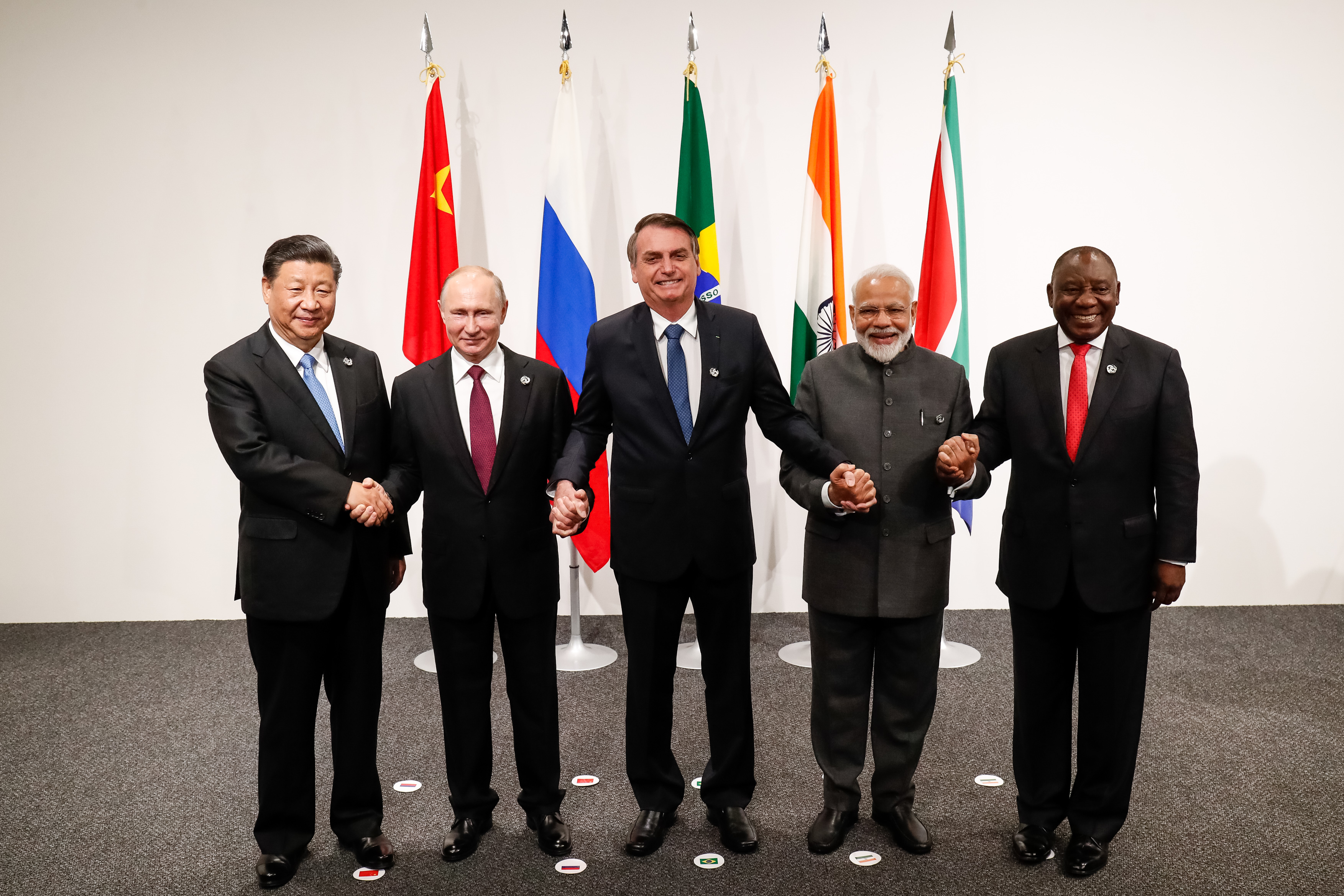
If world diplomacy paused for dinner, where would Delhi book the tables? From Bukhara’s open-fire cooking to Avartana’s contemporary South Indian flavours, an imagined evening out with BRICS leaders becomes a playful invitation to discover the capital through its kitchens.
An ambitious guest list and a hypothetical dinner assignment set the stage for a culinary tour of Delhi. Pairing BRICS leaders with restaurants across the capital, this piece moves through Awadhi traditions, modern Indian tasting menus and Japanese dining rooms. Along the way, it celebrates a city where flavours from far beyond its borders have found a home—and imagines what diplomacy might look like over dinner.
With Delhi currently preparing to welcome some of the world's most closely watched leaders for the 18th BRICS Summit on September 12 and 13, I've been thinking about a slightly less diplomatic question: if I had the impossible-but-very-fun job of planning their dinner, which ones would I choose?
India is hosting the summit this year, bringing together leaders from 11 BRICS nations at a moment when Delhi itself is very much in the global spotlight. The official conversations will, naturally, be about cooperation, trade, technology, resilience and the future of the Global South. But if I had a few hours away from the conference rooms, I'd want to show them another side of the city, one best understood over a beautifully set table.
Because Delhi's food scene is almost as international as the people arriving in it. There are centuries-old Mughlai kitchens, restaurants that reinterpret Indian food through a modern lens, Japanese and Chinese dining rooms, elegant European tables and neighbourhood institutions that have become part of the city's identity. If food is one of the easiest ways to understand a place, Delhi has plenty to say.
So, purely hypothetically, if I were handed the guest list and told to plan the dinner reservations, these would be my picks.
**Vladimir Putin (Russia)- Bukhara, ITC Maurya**
For the Russian President, I'd go somewhere that feels unmistakably Indian rather than trying to find a Russian restaurant.
Bukhara at ITC Maurya is almost impossible to overlook for this particular assignment. Its open-fire cooking, rustic interiors and famous Dal Bukhara make it one of Delhi's most recognisable fine-dining institutions. It has also historically been associated with visiting dignitaries and heads of state, making it a particularly fitting choice for the city's biggest diplomatic week. Current restaurant guides continue to place Bukhara among Delhi's most internationally recognised Indian restaurants.
**Xi Jinping (China)- Dum Pukht, ITC Maurya**
For the Chinese President, I’d choose Dum Pukht at ITC Maurya, a dining room that offers a taste of India through the regal cuisine of Awadh. Known for its slow-cooked dishes, fragrant biryanis and recipes inspired by the kitchens of the Nawabs, bringing the grandeur and history of Awadhi cuisine to the table.
**Cyril Ramaphosa (South Africa)- Indian Accent, The Lodhi**
For South Africa's President Cyril Ramaphosa, I'd choose Indian Accent because this is one of the most interesting ways to introduce an international guest to modern Indian cuisine.
Chef Manish Mehrotra's menu takes familiar Indian flavours and places them alongside global techniques and ingredients. The restaurant has had a long-standing international reputation and remains one of Delhi's most acclaimed dining rooms.
**Prabowo Subianto (Indonesia)- Megu, The Leela Palace**
For Indonesia, I'd choose Megu at The Leela Palace. The restaurant's Japanese fine-dining identity gives you another opportunity to talk about how Delhi's luxury dining scene has expanded far beyond Indian cuisine. It's sleek, theatrical and appropriately special for a diplomatic dinner. Masoud Pezeshkian (Iran)- The Spice Route, The Imperial
For Iran's President Masoud Pezeshkian, The Spice Route at The Imperial would make for an evocative choice because its pan-Asian menu and elaborate setting reflect the centuries-old movement of spices, flavours and culinary ideas across Asia.
**Prince Faisal bin Farhan Al Saud (Saudi Arabia)- Loya, Taj Mahal**
Loya is a North Indian restaurant at the Taj Palace focused on traditional regional flavours, seasonal ingredients and historical cooking techniques. Taj describes it as a showcase for long-preserved North Indian culinary traditions.
**Sheikh Khaled bin Mohamed bin Zayed Al Nahyan (UAE)- Qla, Mehrauli**
Qla in Mehrauli gives you an elevated European/Italian-leaning dining experience with views and a distinctly Delhi setting. It's a good choice if you want to move the article away from formal hotel dining and show the more contemporary side of the capital.
**Abdel Fattah el-Sisi (Egypt)- Jamavar, The Leela Palace**
This gives us another opportunity to showcase Indian culinary heritage, but in a completely different format from Bukhara. Jamavar focuses on regional Indian cuisine in an extremely polished setting, with dishes ranging from North Indian classics to South Indian influences. The restaurant describes its experience as an expression of India's culinary heritage and hospitality.
**Abiy Ahmed Ali (Ethiopia)- Avartana, ITC Maurya**
Avartana presents progressive South Indian cuisine, using traditional South Indian flavours in a contemporary format. ITC describes it as a sophisticated interpretation of South Indian food.
**Narendra Modi (India)- Shraman, The Ashok**
For our Prime Minister, I’d choose Shraman at The Ashok, a fine-dining destination built around the richness of India’s vegetarian culinary traditions. Its menu brings together Rajasthani, Gujarati, Jain and North Indian flavours, making it an elegant introduction to the country’s regional vegetarian cuisine in the setting of one of Delhi’s landmark five-star hotels.
Of course, this is a completely hypothetical dinner party. World leaders have schedules, security protocols and considerably more important things on their calendars than my restaurant recommendations.
But there is something wonderful about imagining it anyway.
Because if the BRICS summit is about bringing different countries and cultures around one table, food feels like a rather fitting place to begin. Delhi has always been a city where cuisines travelled, evolved and found new homes and today, its restaurant scene reflects that history in everything from its legendary kebab houses to its most polished tasting menus.
So if I had one evening, a very ambitious guest list and the freedom to choose the tables, I'd skip the conference room for a few hours.
After all, some conversations are better over dinner.
Latest stories
- Delhi’s last red DTC bus withdrawn for scrapping after 15 years
- GMDA hires consultant to link recycled-water pipelines in Gurugram
- Railway Board sanctions trains for Bengaluru Pink Line’s elevated section
- Khalin Joshi takes six-shot lead at Bengaluru Open halfway stage
- MCG gives 24 hours to clear debris from Gurugram public spaces
- Mumbai: S. J. Poddar Academy Grade 6 students curate Zoographia
- Marsh crocodile rescued from 8-foot electricity duct at Aarey Metro complex
- Western Railway says Mumbai division collected 5.2 tonnes in cleanliness drive
- Over 1,000 students exhibit work at Bengaluru children’s biennale
- Delhi to set up 110 collection centres for old and damaged idols
- Mumbai: Nani says The Paradise makers expected an A certificate
- Niranjan Hiranandani shows six-storey Malabar Hill home Kanta
- Mumbai chocolatier makes 75kg chocolate Ganesha idol for Pune
- Heavy vehicles barred on Varthur-Gunjur SH-35 during peak hours
- CSMT inspection: PAC seeks wider north-side entry for evening rush
- Bengaluru Airport T2 hosts ten-day Odia food festival
- Delhi sets up 78 artificial ponds for Ganpati visarjan
- Mahapanchayat backs Gurgaon road-collision accused; biker calls it an attempt to shift the narrative
- Bengaluru Cantonment station redevelopment expected by December 2026
- Railways approves ₹497 crore to double Chouk–Karjat line
Cities
- Delhi news
- Gurgaon news
- Noida news
- Greater Noida news
- Ghaziabad news
- Faridabad news
- Delhi NCR news
- Bengaluru news
- Mumbai news
- Navi Mumbai news
- Thane news
Sections
- Top Stories
- Latest
- Politics
- Governance
- Civic Issues
- Transport and Traffic
- Metro
- Roads and Infrastructure
- Weather and Air Quality
- Business and Startups
- Real Estate
- Education
- Health
- Environment
- Courts and Policy
- Safety
- Arts and Culture
- Events
- Things To Do
- Food and Drink
- New Openings
- Shopping
- Nightlife
- Neighbourhoods
- People
- Technology
- Sports
GTK covers the news, people, culture, neighbourhoods, civic life and food shaping India’s cities. Better Starts With Us.