Satya Niketan’s PG boom has outgrown its low-rise beginnings
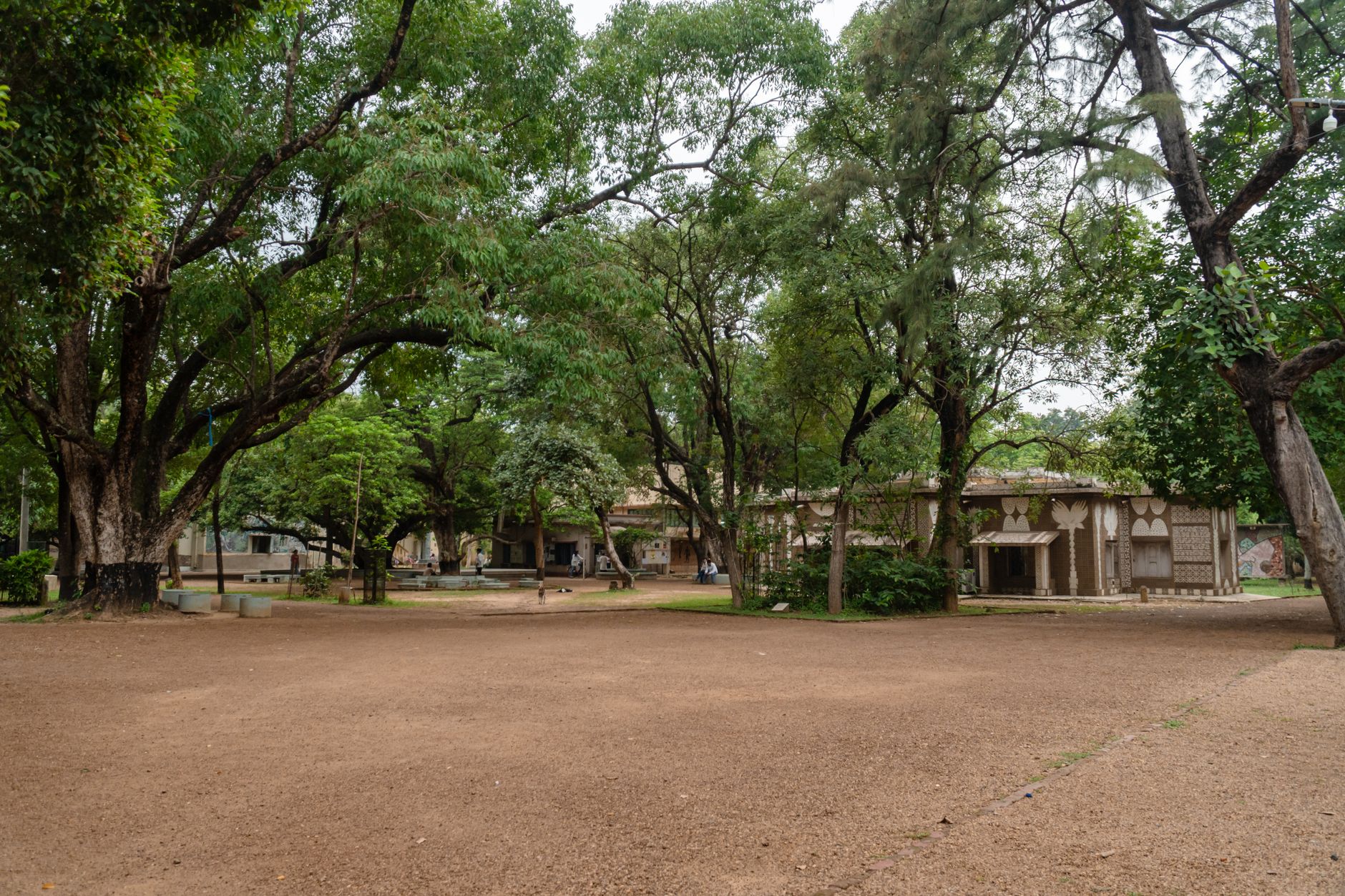
A building collapse in Satya Niketan has brought renewed attention to a south Delhi colony where student rentals expanded far beyond the scale its lanes and original homes were designed for.
Satya Niketan was developed by the DDA in the 1970s and 1980s as a low-rise resettlement colony, but demand from Delhi University’s South Campus turned many homes into PGs and rental units. MCD is examining whether rain, seepage or possible repair work contributed to Sunday’s collapse; officials said the building exceeded the 17.5-metre height limit.
Satya Niketan’s narrow lanes were planned for ground-and-first-floor homes. Today, many of those plots hold student PGs and rental rooms serving Delhi University’s South Campus across the road.
The strain on that transformation came into view after a building collapsed on Sunday. An MCD official said the structure breached the prescribed 17.5-metre height limit. The civic body is examining whether incessant rain and seepage weakened it, or whether repair or other work contributed. Residents alleged that work was under way in the basement.
From resettlement homes to student rentals
The DDA developed Satya Niketan in the 1970s and 1980s for displaced families and labourers, with smaller plots and low-rise structures than nearby Shanti Niketan and Anand Niketan. Former DDA planning commissioner Sabyasachi Das said standard plans allowed only a ground floor and first floor, a restriction also linked to the colony’s proximity to the airport.
After Delhi University set up its South Campus in 1973, local households began renting rooms to students. As colleges including Sri Venkateswara College, Jesus and Mary College and Atma Ram Sanatan Dharma College expanded, landlords added beds, tables and common toilets. Many homes were later converted into PG accommodation, with additional rooms and floors built to house more tenants.
Master Plan for Delhi-2021 allowed hostels and PG facilities on residential plots along roads meeting specified mixed-use street width requirements. Residents say those requirements, particularly on road width, have often not been followed. The proposed Master Plan for Delhi-2047 simplifies some PG norms, while retaining restrictions for A and B category colonies.
Safety and access concerns
In 2012, residents of 45 resettlement colonies, including Satya Niketan, were allowed to obtain freehold rights after paying a prescribed percentage of the circle rate. The change enabled sales, floor divisions and bank loans, adding pressure to an area already coping with growing footfall, vehicle movement, congestion and waterlogging.
The latest collapse was not the first. In April 2022, two labourers died when a building undergoing renovation collapsed in Satya Niketan.
V K Paul, director of the School of Planning and Architecture, Delhi, said the complete collapse without visible distress suggested an unengineered building. He called for safety audits to assess neighbouring structures and whether emergency services can reach them, alongside a basic compliance check before buildings are occupied.
Latest stories
- The Blondie House opens in Versova with coffee, matcha and all-day dining
- Delhi’s last red DTC bus withdrawn for scrapping after 15 years
- GMDA hires consultant to link recycled-water pipelines in Gurugram
- Railway Board sanctions trains for Bengaluru Pink Line’s elevated section
- Khalin Joshi takes six-shot lead at Bengaluru Open halfway stage
- MCG gives 24 hours to clear debris from Gurugram public spaces
- Mumbai: S. J. Poddar Academy Grade 6 students curate Zoographia
- Marsh crocodile rescued from 8-foot electricity duct at Aarey Metro complex
- Western Railway says Mumbai division collected 5.2 tonnes in cleanliness drive
- Over 1,000 students exhibit work at Bengaluru children’s biennale
- Delhi to set up 110 collection centres for old and damaged idols
- Mumbai: Nani says The Paradise makers expected an A certificate
- Niranjan Hiranandani shows six-storey Malabar Hill home Kanta
- Mumbai chocolatier makes 75kg chocolate Ganesha idol for Pune
- Heavy vehicles barred on Varthur-Gunjur SH-35 during peak hours
- CSMT inspection: PAC seeks wider north-side entry for evening rush
- Bengaluru Airport T2 hosts ten-day Odia food festival
- Delhi sets up 78 artificial ponds for Ganpati visarjan
- Mahapanchayat backs Gurgaon road-collision accused; biker calls it an attempt to shift the narrative
- Bengaluru Cantonment station redevelopment expected by December 2026
Cities
- Delhi news
- Gurgaon news
- Noida news
- Greater Noida news
- Ghaziabad news
- Faridabad news
- Delhi NCR news
- Bengaluru news
- Mumbai news
- Navi Mumbai news
- Thane news
Sections
- Top Stories
- Latest
- Politics
- Governance
- Civic Issues
- Transport and Traffic
- Metro
- Roads and Infrastructure
- Weather and Air Quality
- Business and Startups
- Real Estate
- Education
- Health
- Environment
- Courts and Policy
- Safety
- Arts and Culture
- Events
- Things To Do
- Food and Drink
- New Openings
- Shopping
- Nightlife
- Neighbourhoods
- People
- Technology
- Sports
GTK covers the news, people, culture, neighbourhoods, civic life and food shaping India’s cities. Better Starts With Us.