The Last Artists Keeping Sawantwadi’s Ganjifa Tradition Alive
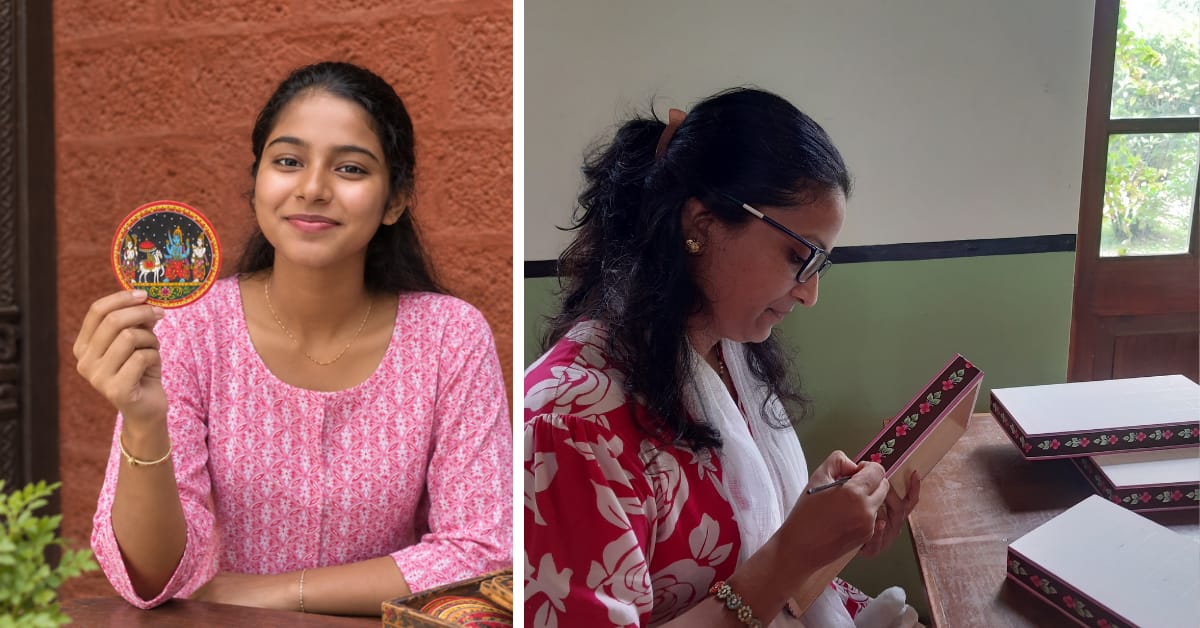
From Persia and the Mughal courts to the royal halls of Sawantwadi Palace, ganjifa has travelled across centuries and cultures. Revived in Sawantwadi in 1971, the traditional card game is kept alive by generations of artists who hand-paint every intricate detail.
A journey through the Konkan leads to Sawantwadi Palace, where generations of artists keep ganjifa’s intricate craft alive. Through conversations, a painting lesson and a game, this piece traces the cards’ journey from Persian and Mughal traditions to their revival under royal patronage. It celebrates the skill, family knowledge and renewed interest helping this painstakingly handmade art find its next generation of artists and players.
If you ever get a chance to play a game of ganjifa, it might be nice to remind yourself that every single corner of the cards is handcrafted. They are untouched by modernity.
I recently went village-hopping across the Konkan belt, and one non-negotiable stop on my way was Sawantwadi Palace. I’d written about it, seen pictures, and previously interviewed Yuvrani Shraddha Bhonsle and Yuvraj Lakham Khem Sawant Bhonsle. Now it was time to see the beauty of everything I’d written about, for myself.
And let me tell you, the pictures pale in comparison to the actual thing.
**The Darbar Hall Where The Magic Happens:**
The hall is massive, and my ‘wow’ echoes off its one and a half century-old walls. Along its length, a row of chairs is host to the artists who spend hours painting the ganjifa cards — the protagonists of the region. History commends Sawantwadi’s autonomy, as one of the only remaining places in India where the ancient art of ganjifa is still practised. And behind this braggable milestone is the Sawant Bhonsle family, who have been upholding the art of ganjifa and lacquerware art forms.
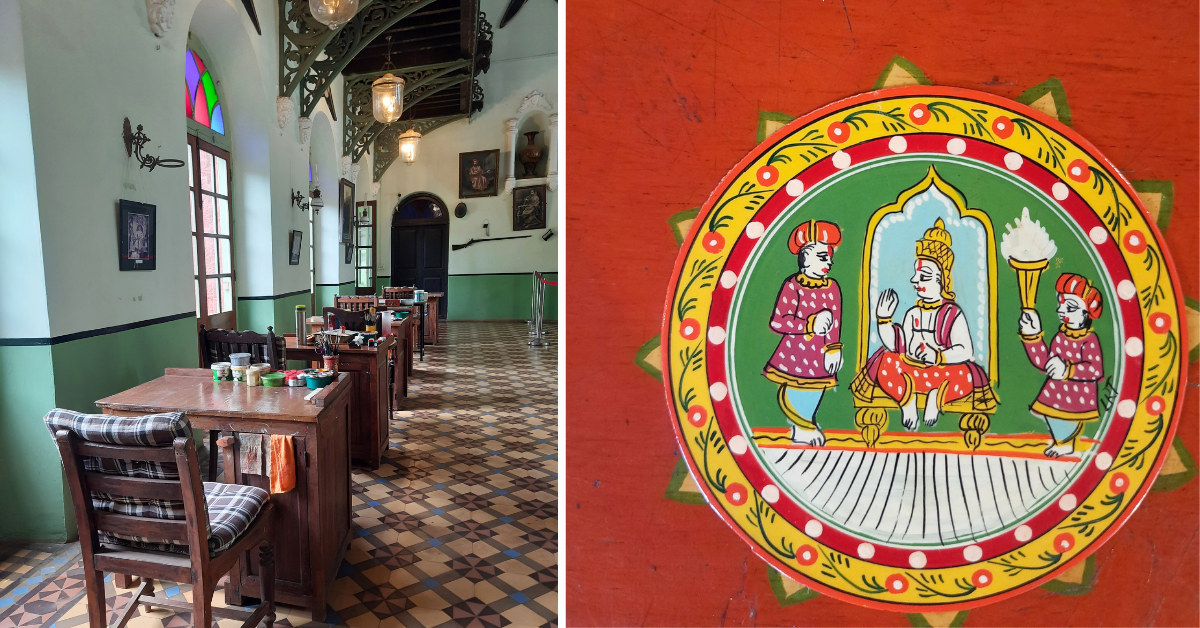
(*The Darbar Hall where the artists paint the ganjifa cards (left); a King card from the Mughal ganjifa set (right). Picture credits: Krystelle Dsouza*)
Walking through the Darbar Hall of the palace is like stepping inside the architecture of the previous rulers’ minds. Their portraits adorn the walls; there are stuffed game from decades-old hunting expeditions (before the sport was banned in 1972), and thrones from when they ruled. While legacy colours deck the hall, they are interspersed with vibrant hues from the ganjifa cards.
With an origin that traces to Persia (‘ganj’ is a Persian term meaning ‘treasure, treasury or hoard of wealth’; the Persian word ‘ganjifeh’ means ‘playing cards’), ganjifa is said to have been brought to India by the Mughals in the 16th century. The earliest reference to ganjifa cards is in a poem by the Persian poet Ahli Shirazi, called ‘Rubaiyat-e-Ganjifa’, published circa 1535.
After a hiatus of many years (during which the cards were not made or played), in 1971, after a trip to the Victoria and Albert Museum in London, where H.H. Rajesaheb Shivramraje Bhonsle and his wife, H.H. Rajmata Satvashiladevi Bhonsle, spotted the cards, they returned with the idea to revive ganjifa in Sawantwadi.
As I learnt — I spent time with Goa’s Chitari community during my village-hopping — during the Inquisition in Goa, part of the Chitari family moved to Sawantwadi at the behest of the king there. The Chitari family were famed for their knowledge of ganjifa art, which focused on mythological figures. The royal couple thus learnt the art from the legendary Pundalik Chitari. Their idea to revive ganjifa led to the inception of the Sawantwadi Lacquerwares.
In time, many other versions of ganjifa evolved. In fact, as artist Arya Devrukhkar (21) tells me, while explaining how a ganjifa game is played, today, in addition to the 13 different types of ganjifa (all made and sold at Sawantwadi Palace), there are also the regular playing cards that carry Indian designs.
She points to the box designed for them. It features women. The design intervention is new, introduced by the late Rajmata Satvashiladevi Bhonsle, Arya explains. Earlier card sets featured only kings.
Gayatri Vishwanath Kulkarni (41), one of the senior artists at the palace, credits Yuvrani Shraddha’s efforts for the ganjifa making its way into popular consciousness. “Ever since ma’am started sales on platforms like Instagram, ganjifa has been getting a lot more recognition,” she shares. Since the revival, Sawantwadi Palace has been attracting a broad spectrum of culture enthusiasts. “There are also art students who come to the palace to learn. We teach them the borders of the cards,” Gayatri shares.
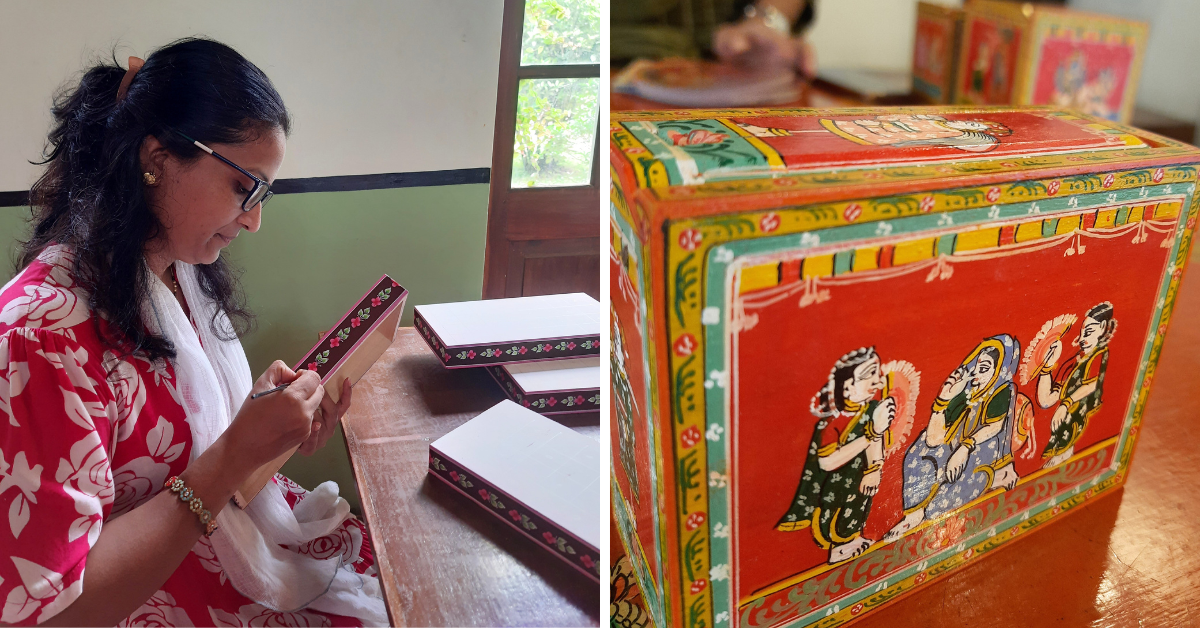
*(Gayatri Vishwanath Kulkarni painting the chess box (left); the Indo-French card set box, which features women in the design (right). Picture credits: Krystelle Dsouza)*
She’s a patient teacher.
For one painstaking hour she taught me how to paint the matsya card, one of the 10 suits in the Dashavatara Ganjifa deck, depicting Lord Vishnu’s first incarnation as a fish.
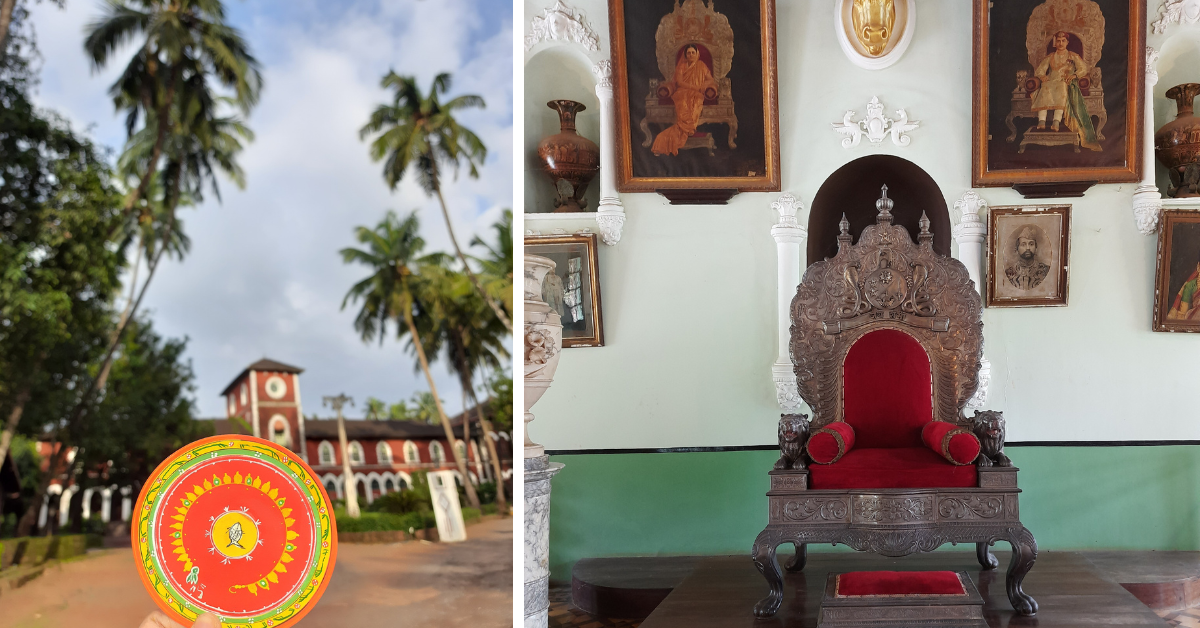
(*The matsya card I painted (left); the Darbar Hall at Sawantwadi Palace (right). Picture credits: Krystelle Dsouza*)
Gayatri’s father-in-law, Mohan Kulkarni, is one of the oldest artists at the palace. He learnt ganjifa under the aegis of the king and queen in 1971, when the revival was first attempted. Gayatri shares his story, “He saw an advertisement for artists in the newspaper. At the time, he was living in Hubballi, Karnataka. Once he was selected, he came to Sawantwadi, learnt ganjifa and still paints sets.”
While listening to his story, and while watching Gayatri paint the suits with such skill, it strikes me that ganjifa goes beyond art. Painting a set is a powerful tactile memory carried in muscle and colour. It resides in your blood.
**Playing a Ganjifa Game:**
The Sawantwadi Palace, built by Khem Sawant III, overlooks Moti Talav. While the royal family — Yuvraj and Yuvrani and Lakham’s parents, Khem Sawant VI and Shubhadadevi Bhonsle — continues to reside in one section, artisan ateliers occupy the other. As Arya takes me around, she pauses at a table for four. This is where ganjifa is played, she explains, proceeding to unpack a deck of cards.
Looks like we’re playing.
The first thing Arya does before teaching me how to play a game of ganjifa is to educate me about each card, explaining its design and significance. The Dashavatara Ganjifa consists of 10 incarnations of Lord Vishnu: matsya (a giant fish), kurma (tortoise), varaha (boar), narasimha (man-lion), vamana (dwarf Brahmin), parashurama (warrior), Rama (a king who fights with the King of Lanka), Krishna (supreme incarnation of Lord Vishnu), Buddha and kalki (final avatar of Lord Vishnu, who is said to appear on a white horse and destroy the present sinful age). The Dashavatara Ganjifa has evolved from the Mughal Ganjifa.
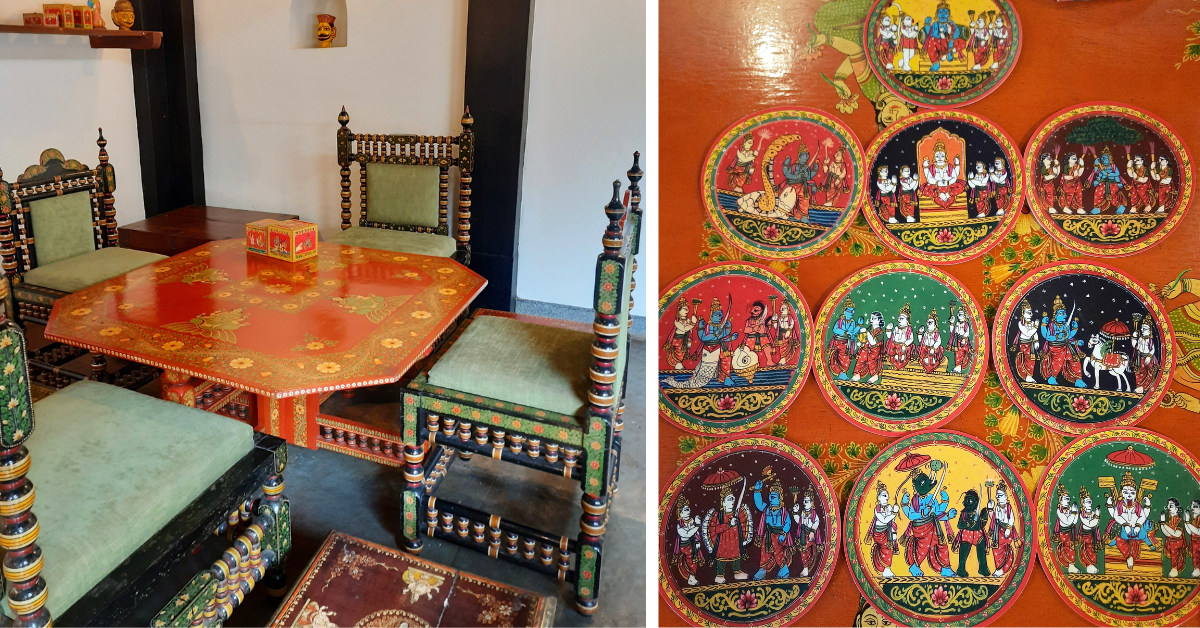
*(The traditional ganjifa set-up (left); the ten cards with the avatars of Lord Vishnu (right). Picture credits: Krystelle Dsouza)*
In the first five suits, 1 is the highest and 10 is the lowest number after king and vazir. Whereas, in the last five suits, 10 is the highest and 1 is the lowest numerical after king and vazir. Each suit consists of 12 cards, making a complete deck of 120 cards.
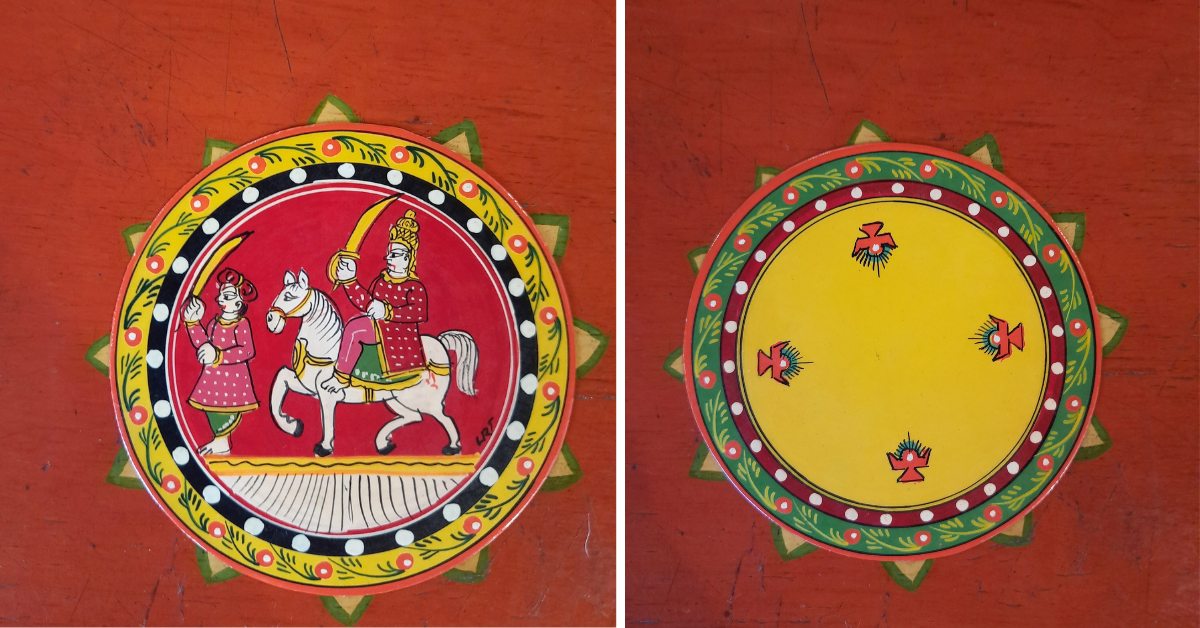
*(The vazir card of the sword suit sign of the Mughal Ganjifa set (left); the lamp suit of the Mughal Ganjifa (right). Picture credits: Krystelle Dsouza)*
Once we get past the pleasantries, Arya explains the game. She’s an expert in the visual language of the cards. While initially she thought she would find it tough to design the complex sets with figures, she loves a good challenge.
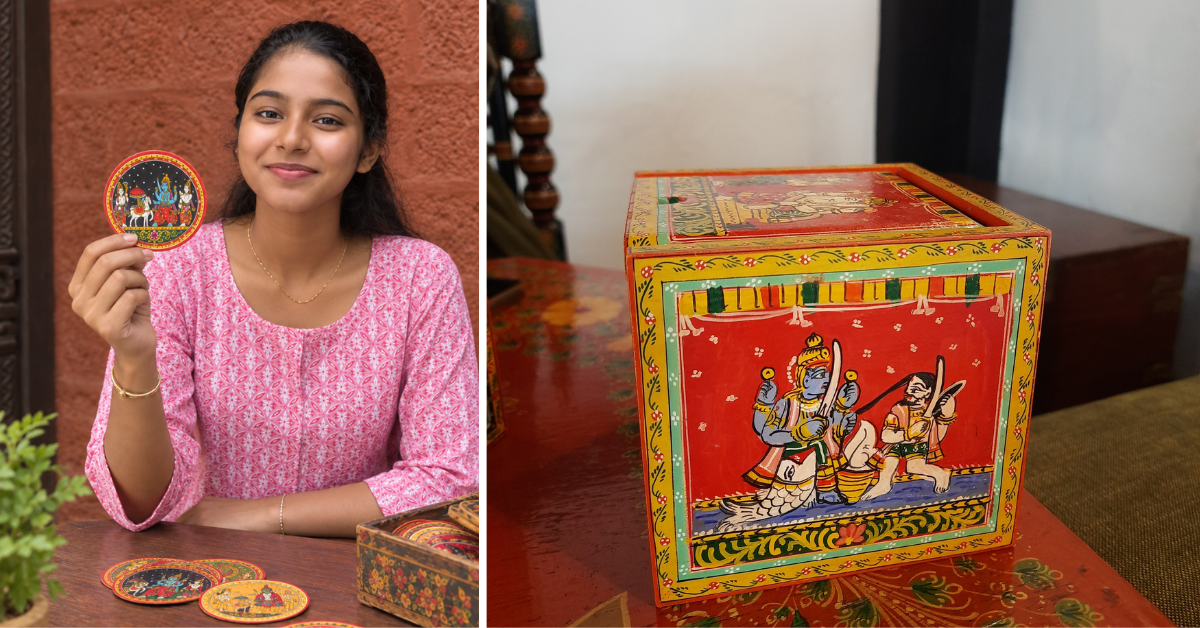
*(Arya Devrukhkar (left); Dashavatara Ganjifa set box (right). Picture credits: Krystelle Dsouza)*
One of her favourite stories is how Rajmata Satvashiladevi Bhonsle handpicked every artist to paint the ganjifa cards in 1971. “Mohan ajoba used to tell me that there were more than 60 artists in the initial days. At that time there was no LinkedIn. Rajmata contacted them individually and taught them ganjifa art.”
As reports suggest, some versions of the cards were on stone-inlaid ivory etched in enamelled silver, gold or tortoise shell, with sandalwood pieces. These were called darbar kalam. The other, known as the bazar kalam, was made for the general public. Traditionally, ganjifa cards were painted with mouse-hair brushes and natural colours: white (from powdered shells); green (from leaves); black (from lamp soot); red, blue and yellow (from various natural stones).
Each card set takes a month and a half to make.
And the result is beauty personified.
As I said, the next time you play a game of ganjifa, remind yourself that it was handcrafted over 150 hours just for you.
Latest stories
- Delhi’s last red DTC bus withdrawn for scrapping after 15 years
- GMDA hires consultant to link recycled-water pipelines in Gurugram
- Railway Board sanctions trains for Bengaluru Pink Line’s elevated section
- Khalin Joshi takes six-shot lead at Bengaluru Open halfway stage
- MCG gives 24 hours to clear debris from Gurugram public spaces
- Mumbai: S. J. Poddar Academy Grade 6 students curate Zoographia
- Marsh crocodile rescued from 8-foot electricity duct at Aarey Metro complex
- Western Railway says Mumbai division collected 5.2 tonnes in cleanliness drive
- Over 1,000 students exhibit work at Bengaluru children’s biennale
- Delhi to set up 110 collection centres for old and damaged idols
- Mumbai: Nani says The Paradise makers expected an A certificate
- Niranjan Hiranandani shows six-storey Malabar Hill home Kanta
- Mumbai chocolatier makes 75kg chocolate Ganesha idol for Pune
- Heavy vehicles barred on Varthur-Gunjur SH-35 during peak hours
- CSMT inspection: PAC seeks wider north-side entry for evening rush
- Bengaluru Airport T2 hosts ten-day Odia food festival
- Delhi sets up 78 artificial ponds for Ganpati visarjan
- Mahapanchayat backs Gurgaon road-collision accused; biker calls it an attempt to shift the narrative
- Bengaluru Cantonment station redevelopment expected by December 2026
- Railways approves ₹497 crore to double Chouk–Karjat line
Cities
- Delhi news
- Gurgaon news
- Noida news
- Greater Noida news
- Ghaziabad news
- Faridabad news
- Delhi NCR news
- Bengaluru news
- Mumbai news
- Navi Mumbai news
- Thane news
Sections
- Top Stories
- Latest
- Politics
- Governance
- Civic Issues
- Transport and Traffic
- Metro
- Roads and Infrastructure
- Weather and Air Quality
- Business and Startups
- Real Estate
- Education
- Health
- Environment
- Courts and Policy
- Safety
- Arts and Culture
- Events
- Things To Do
- Food and Drink
- New Openings
- Shopping
- Nightlife
- Neighbourhoods
- People
- Technology
- Sports
GTK covers the news, people, culture, neighbourhoods, civic life and food shaping India’s cities. Better Starts With Us.