The Missing Mango Orchards from Patna
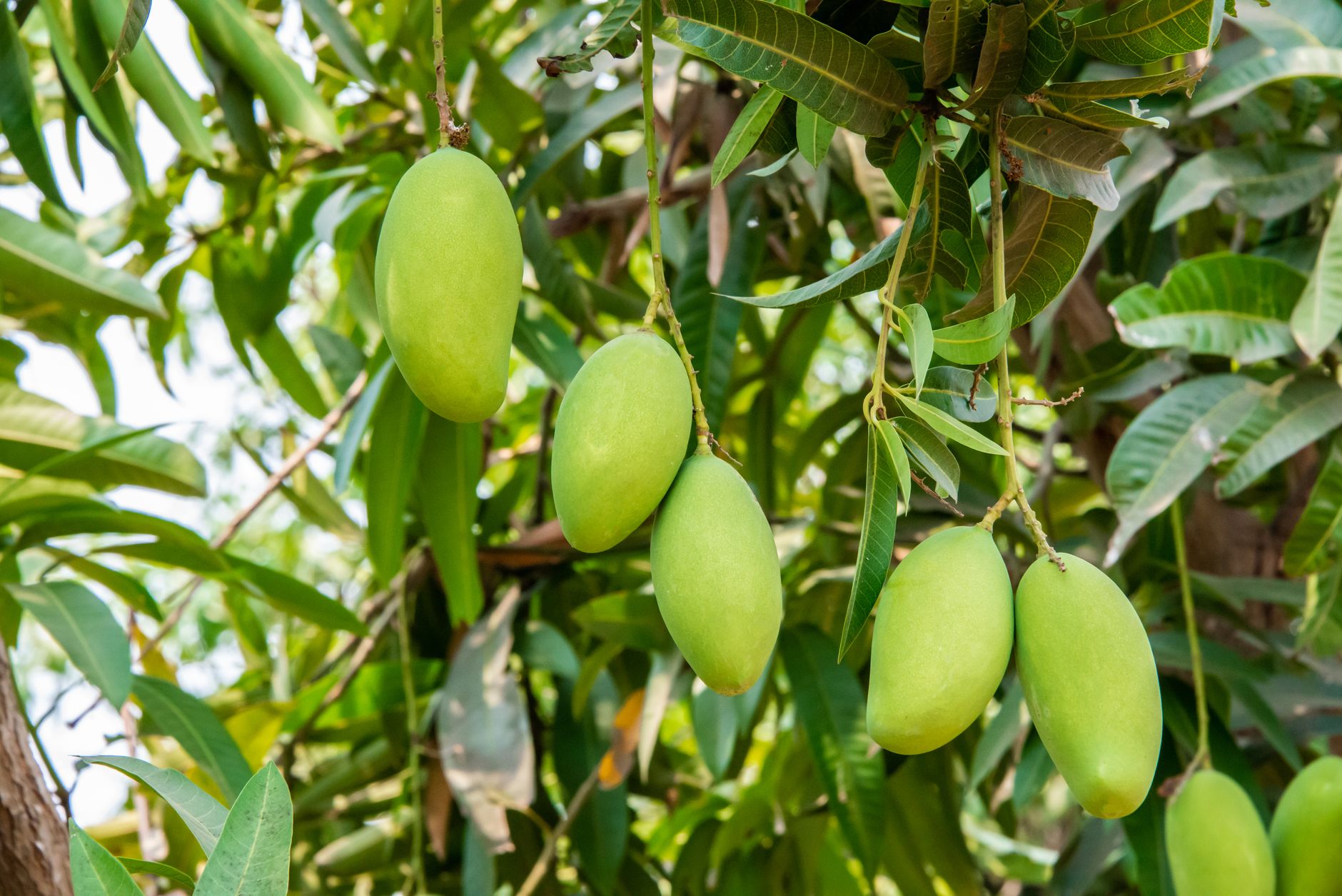
What happened to the orchards that gave birth to the famous Dudhiya Malda?
The city remembers itself through what it grows. Patna once grew mangoes in abundance, but now it sits in the ambiance of a concrete jungle. A city’s development cannot happen at the expense of losing its core identity. Identifying and acknowledging the extent of the problem is the first step towards a solution. Hopefully, the conversations will eventually give way to the restoration work on the Dudhiya Malda orchards.
I sit on the verandah at my Maasi’s house. It’s early in the morning, and the wonderful dawn chorus fills the air even before the rest of the world wakes up.
I feel blessed to have woken up with them and see the day as I rarely do. I watch a squirrel stealing a dog’s food, a butterfly looking for her next spot to sit, a cuckoo walking on the railing, and a bird secretly entering her nest deep inside the dense tree.
The tree!
I almost forget to notice.
It’s right after the time I had been noticing it every day for the past two months. The discussions with Maasi have been around this tree ever since the mango blossoms filled its branches.
“Kitne saare baur aayein hain, na!?”; we would comment excitedly.
It looked as if the tree had adorned itself in full ‘shringaar’, in preparation to welcome the fruits coming after a heartbreakingly long absence.
We noticed when the first fruit appeared. And how soon after, its brothers filled the branches. A huge mango tree stood at the corner of the house as always, and all we saw were the hanging clusters of mangoes.
Mangoes have a charm of their own. Even in their unripe youth, they don’t fail to bring sweetness to the heart. We would often ask Maasi when they would be ready to pluck, and the wait grew more impatient as the time came nearer day-by-day.
Two months after celebrating the arrival of mangoes, the huge tree still stands at the same corner of the house, but nobody notices it anymore.
Except for the birds; they still consider it home.
As this unsettling realisation hits me, I remember my early memories with the mango trees.
Nani ghar.
It had 8-10 mango trees in its backyard garden (along with other fruit trees), and our cousins and I would be given the responsibility of preventing them from getting plucked by notorious kids in the village during quiet summer afternoons.
At first, they would run off seeing us, but later, they realised we were too small to do anything. So, they stole the mangoes in front of our eyes. And all we poor kids could do was scold and scream at them not to do so. (noobs, I know)
As I share this familiar realisation with Maasi that I miss those mango trees in the village, she recalls that the house we are sitting in right now was a mango garden back in the day.
This mango tree had brothers?
She shares that the plot for four neighbouring houses that we see (including ours) was sold together by a man who owned them all. The four new owners who bought the land happened to build their houses, cutting the mango trees. Three of them left one mango tree each at the corner of their houses as a kind gesture.
She further went on to reveal that not just our plot, but a large part of the neighbourhood was also covered by mango trees, owned by different farmers. All of them sold their land, and later either builders built apartments or the new owners got their villas made.
As she shares her memory, I remember those blurry visuals from my childhood, when I would spot mango trees from the backside windows of her house. Not just her house; many houses I visited during childhood — relatives’ and family friends’ — had similar views. Large empty plots, barely any houses, and the entire land either covered with green mango trees or some crops.
Today, we hardly see any of that green. Well, we do see the unending lines of concrete.
Localities in Patna are still known by the names they got because of their famous gardens — Gulzarbagh, Gardanibagh, Chajjubagh, Bander Bagicha, and more — oblivious to the fact that concrete jungles have taken over their gardens long ago. Somehow, names remember to hold the innocence of their long-lost identity.
And, just like that, the soil that has the ability to grow the richest mangoes has lost its trees. And nobody seems to notice, let alone be bothered by it.
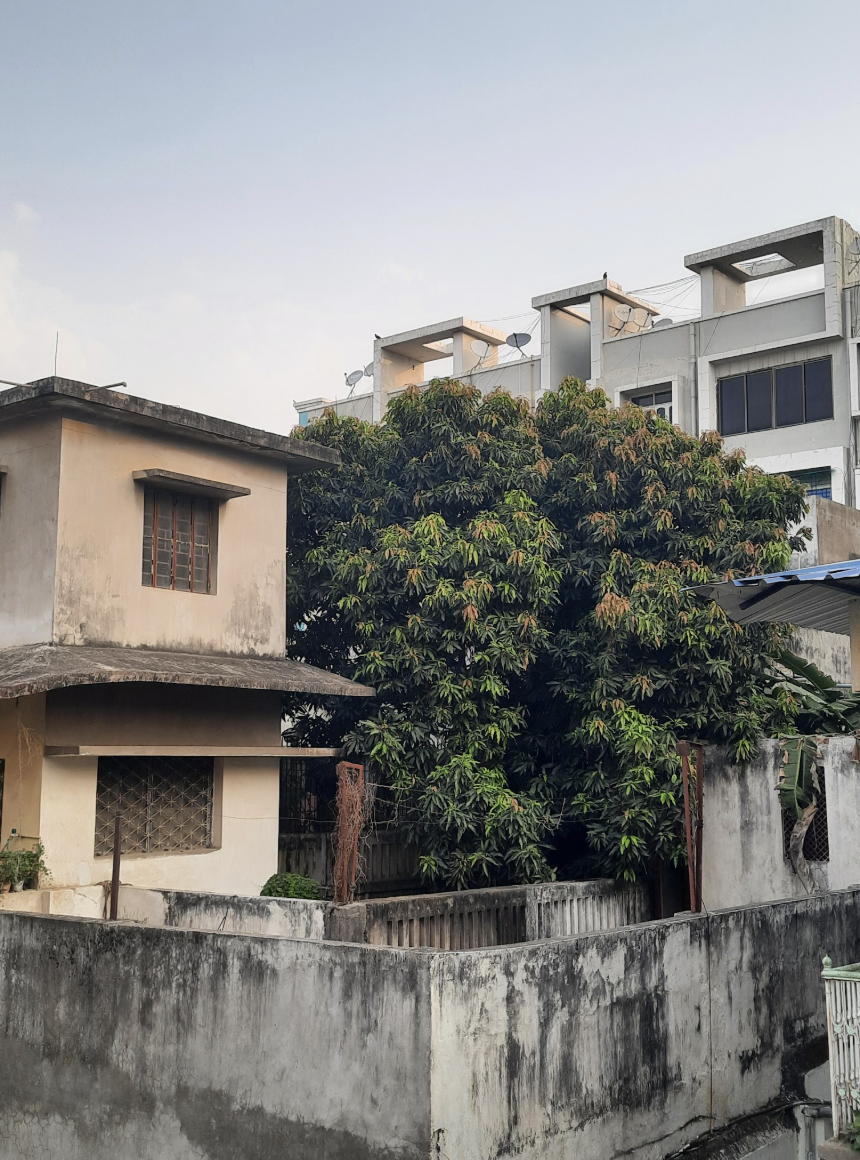
Well, we never noticed the tree. We only cared for the mangoes.
In the race of rapid development, the city lost the essence that it was once known for. But snatching one’s identity from the roots is not healthy development.
In her commitment to development, Patna was ready to toss his identity, hoping that one day he would be valued and appreciated for all her sacrifices. In disguise, she married a never-ending construction. She continues to be on the same train she boarded decades ago, still waiting to arrive at the destination of her far-fetched dreams.
The loss happened even though the land grew one of the tastiest mangoes in the country. In 1997, this mango variety found in Patna was ranked first at the Singapore Mango Exhibition for its incredible flavour and fragrance.
It has an interesting birth story. The Nawab of Lucknow, Fida Hussain, brought a mango sapling from Islamabad (in present-day Pakistan) and planted it at the ghats of Digha, Patna.
He later did something unique. Instead of watering the plant, he poured surplus cow’s milk into its roots. Surprisingly, when the fruit came out, it had a thin, pale-green skin with thick, light yellow and creamy pulp that tasted delightfully sweet. A milk-like substance would come out when plucked or when the surface was scratched.
Hence, came the name — Dudhiya Malda. (Dudhiya comes from the milk, and Malda comes from the name of the mango variety in the region.)
However, scientists believe the milk barely had a role to play in the mango variety being what it is; the soil did. The rich, alluvial soil deposited by the Ganga in this region played the X factor in giving the mango its unique quality.
The Nawab had planted 500 trees back in the day.
Later, in the modern era, a person named Mohammad Irfan took its heritage forward, playing an important role in expanding and preserving the trees and also in taking the fruit’s fame to national and international levels. For a long time, the entire Digha ghat, starting from Boring Canal Road, was covered with dense mango orchards. My elder cousins even recall that the road from their home at Vednagar to school at Rukunpura was just full of the view of lively mango orchards.
The abundant supply of Dudhiya Malda gave the city the privilege of buying them by the count of sixties and not in kilos. Cut to today. You rarely find a Dudhiya Malda Aam from the ghats of Digha for sale in the market, because the handful of mangoes that come out of the remaining trees are sold out directly from the farm, right after they are plucked.
The rapid shrinking of the mango orchards happened after Mohammad Irfan’s death. The orchards lost themselves to urbanisation, waterlogging, and climatic conditions.
Today, these mango orchards remain at only a handful of spots in Patna. St. Xavier’s College campus preserves around 150 trees, while Bihar Vidyapeeth preserves around 50 trees. Other areas where some mango trees remain are Raj Bhawan and Kurji Family Hospital Ground.
Some more mango trees exist in personal housing campuses like ours. Mostly standing alone. On the verge of extinction.
I stare at the lone mango tree in the garden much longer than I should have.
Or shall I say I stare at the tree much later than I should have?
I should have looked at it while it still stood in the garden it belonged to, and not on the house campus.
We should have all collectively looked at them long enough when most of them were still alive.
Maybe the glance would have evoked some feelings inside us, as it did for me today, and we could have saved them with better planning of the city. Who knows, we could have been a city with mango parks/gardens at the heart of every colony.
Maybe we should look at them now.
Latest stories
- GMDA hires consultant to link recycled-water pipelines in Gurugram
- Railway Board sanctions trains for Bengaluru Pink Line’s elevated section
- Khalin Joshi takes six-shot lead at Bengaluru Open halfway stage
- MCG gives 24 hours to clear debris from Gurugram public spaces
- Mumbai: S. J. Poddar Academy Grade 6 students curate Zoographia
- Marsh crocodile rescued from 8-foot electricity duct at Aarey Metro complex
- Western Railway says Mumbai division collected 5.2 tonnes in cleanliness drive
- Over 1,000 students exhibit work at Bengaluru children’s biennale
- Delhi to set up 110 collection centres for old and damaged idols
- Mumbai: Nani says The Paradise makers expected an A certificate
- Niranjan Hiranandani shows six-storey Malabar Hill home Kanta
- Mumbai chocolatier makes 75kg chocolate Ganesha idol for Pune
- Heavy vehicles barred on Varthur-Gunjur SH-35 during peak hours
- CSMT inspection: PAC seeks wider north-side entry for evening rush
- Bengaluru Airport T2 hosts ten-day Odia food festival
- Delhi sets up 78 artificial ponds for Ganpati visarjan
- Mahapanchayat backs Gurgaon road-collision accused; biker calls it an attempt to shift the narrative
- Bengaluru Cantonment station redevelopment expected by December 2026
- Railways approves ₹497 crore to double Chouk–Karjat line
- Delhi Metro logs record 82.45 lakh boardings during DTC strike
Cities
- Delhi news
- Gurgaon news
- Noida news
- Greater Noida news
- Ghaziabad news
- Faridabad news
- Delhi NCR news
- Bengaluru news
- Mumbai news
- Navi Mumbai news
- Thane news
Sections
- Top Stories
- Latest
- Politics
- Governance
- Civic Issues
- Transport and Traffic
- Metro
- Roads and Infrastructure
- Weather and Air Quality
- Business and Startups
- Real Estate
- Education
- Health
- Environment
- Courts and Policy
- Safety
- Arts and Culture
- Events
- Things To Do
- Food and Drink
- New Openings
- Shopping
- Nightlife
- Neighbourhoods
- People
- Technology
- Sports
GTK covers the news, people, culture, neighbourhoods, civic life and food shaping India’s cities. Better Starts With Us.