Who Gets to Say ‘Namma’?
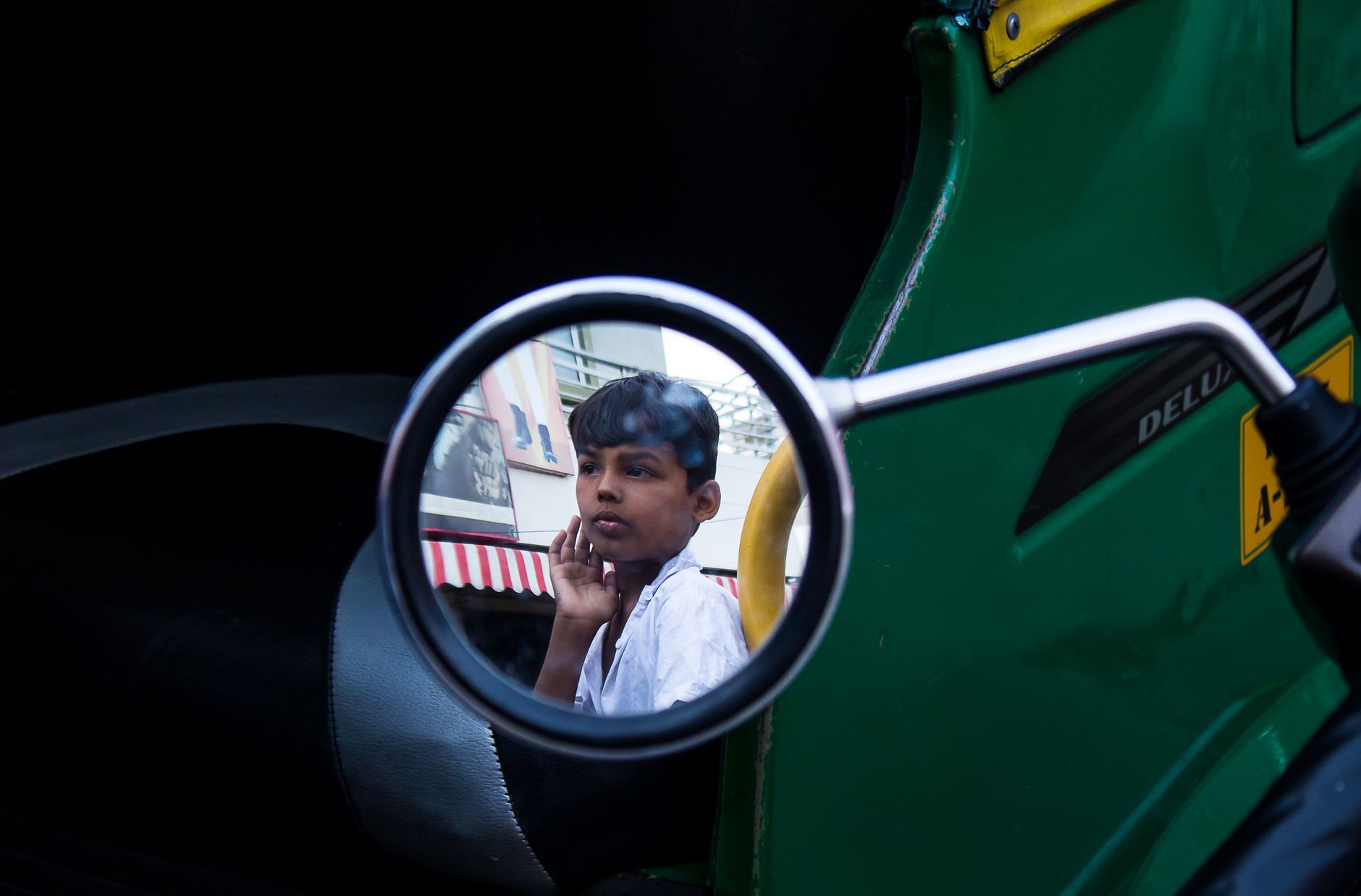
The streets we grow up on, the languages we mix, the places we claim – and the city that coalesces
The phrase ‘Namma Bengaluru’ means ‘Our Bengaluru’—but who gets to claim the city as their own? This piece explores belonging, identity and how the people who live, work and build Bengaluru are all co-producers of the city.
Contested Civic Identity and Belonging
The phrase ‘Namma Bengaluru’ is woven into the visual landscape across the city of Bengaluru. It appears emblazoned on BMTC buses, street signs, malls, and commercial spaces, and even etched in chalk on a public wall. Though it lacks a clear origin, it has accumulated meanings through repeated use across Bengaluru’s cultural, institutional, civic, and political landscape. Despite the emotional appeal of ‘Our Bengaluru’, which is what the Kannada phrase translates to, it has been variously used to narrate the city’s history, mobilise political identity, encourage civic contribution, and even build a public brand whose manifestations, ‘Namma Metro’, ‘Namma Yatri’, ‘Namma Dosa’, ‘Namma Cafe’, spread across the city. The contemporary usage of the phrase is distinct from the more intimate sentiment of ‘namma’. According to the 2011 Census, Bengaluru had a total population of approximately 8.44 million. By 2024, officials of the Bruhat Bengaluru Mahanagara Palike (BBMP), in a submission to the Karnataka State Finance Commission, estimated Bengaluru’s population at around 14 million. The 2011 census also recorded around 4.43 million migrants residing in Bengaluru city and its outgrowths. Migration and cultural mixing have shaped a city where diverse lives co-exist alongside multiple meanings of the phrase ‘Namma Bengaluru.’ One must therefore consider who constitutes ‘namma’? Whose Bengaluru is ‘Namma Bengaluru’? Who gets to call Bengaluru ‘namma’, and produce the meaning of belonging? Asking the right questions fosters a shift from an exclusivist understanding of the phrase towards an inclusivist understanding and the spirit of ‘namma’ itself.
Since the phrase has acquired multiple nuances, one must adopt a nuanced perspective to accurately answer these questions. It is necessary to differentiate between the right to access the city, and the right to belong to it. Despite having the legal right to live in the city, the claim to belonging may be contested and negotiated through mechanisms such as language, birth, length of residence, gender, wealth, class, occupation, housing, political power, social status, and property ownership. When belonging is contested, access becomes uneven and limited too. One’s ability to access public spaces, transport, housing and other facilities; influence decisions affecting their neighbourhood, represent the city and call it ‘namma’ are also contested. In light of this, it becomes imperative to ask, what does ‘Namma Bengaluru’ mean to a street vendor? Or to the local Kannada speaker frustrated by linguistic changes, the migrant who may have lived in the city for 15 years, but feels like an outsider, the IT worker commuting to Whitefield, the woman afraid to walk a dark street at night, the auto-driver who cannot access premium cafes, the street vendor whose stall is removed overnight, the migrant living in a rented house, the shopkeeper losing business to quick commerce or the delivery boys delivering food in the rain? Bengaluru's residents are culturally, regionally, socially, economically, and occupationally diverse. No singular 'namma' fits all. ‘Namma Bengaluru’ implies a collective civic identity. Civic belonging implies the right to inhabit, participate, use and shape urban life in the city. Both warrant a closer examination.
The Institutional City and the Produced City
The institutional city of Bengaluru is the city that is made legible and visible through master plans, official maps, infrastructure, urban designs, administrative bodies, networks of transport, city branding, and official representations of the city. This city can be measured, managed, and represented. From this perspective, Bengaluru becomes the Silicon Valley, the Garden City, the IT and startup ecosystem hub. Visible institutional bodies such as the Greater Bengaluru Authority, Bangalore Development Authority, The Bangalore Metro Rail Corporation Limited (BMRCL), The Bengaluru Metropolitan Transport Corporation (BMTC), The Bangalore Water Supply and Sewage Board (BWSSB) plan, regulate, manage, approve, and commission. Private establishments like real estate developers, urban design firms, construction companies, and infrastructure contractors also design, tender, engineer, and physically construct. This robust and highly visible institutional architecture ‘produces’ Bengaluru. At the same time, the workers who materially produce the city brick by brick, so to speak, including construction workers, electricians, plumbers, painters, masons, drivers, and machine operators remain invisible and illegible within the same systems of institutional legibility. In a 2025 audit of Karnataka's welfare system for construction workers, the Comptroller and Auditor General (CAG) reported a lack of accurate and comprehensive data on the total number of construction workers and the number of construction workers registered with the Board. It also found discrepancies of up to 91.51% between beneficiary data reported by selected field offices and records maintained at the Board’s headquarters, suggesting weakness in reporting and data reconciliation systems. In other words, the people who build the city and are physically indispensable to it remain administratively difficult to count. If ‘Namma Bengaluru’ means ‘Our Bengaluru’, must the people who materially produce the city through their labour, remain illegible and invisible?
The Lived City and Citizens as Co-producers
Another Bengaluru is simultaneously written - one that at times even overwrites the institutional city. This Bengaluru emerges through the ways in which residents experience, inhabit and claim the city, often in ways that exceed institutional frameworks and accounting. The lived city becomes legible through the everyday practices of its citizens, like taking a walk or a shortcut, renting an apartment, commuting to work, appropriating a shopping mall into a hang-out spot. This is the city that is lived, loved, and experienced. Contrary to the institutional city, the lived city is not singular. Rather, each resident produces their own version by interacting with it in particular ways. A specific route, the best time to commute, mixed linguistic practices, a specific tea shop, a shortcut, a market, memories of certain neighbourhoods, unconventional social networks like friendship with a shopkeeper, recognizing neighbourhood sounds, a favourite eatery, informal economies, all become their version of the city, their namma. This Bengaluru may or may not appear on the official maps but it is real, even more than the one on the maps. From this perspective, ‘Namma Bengaluru’ goes beyond a label or brand applied to the city. It includes actively producing it through everyday acts and making the city one’s own.
The making of Bengaluru is inseparable from the people who inhabit it. Bengaluru is not a geographic container that came into being first and got inhabited later. It came into existence through inhabitation and participation of the people who chose to reside in it and carry out their everyday lives and practices. Similarly, the citizens of Bengaluru do not merely consume the city that is institutionally and materially produced. Instead, they occupy the social space within it and write it themselves. They are therefore co-producers in the practice of city building. The institutional city and the lived city, too, are not entirely separate. They complement and shape one another. Planning, infrastructure, capital, migration, labour, language, memory, culture, and everyday practices together produce Bengaluru. ‘Namma Bengaluru’ can thus be understood as a conceptual shift from ‘namma as a noun’ to ‘namma as a verb’. It is a claim in the making of Bengaluru.
Loving Bengaluru; Namma Bengaluru
The relationship to a city and civic belonging is also emotional and affective in nature. It is developed through place attachment and the networks of memories, experiences, and relationships existing with and within that place. One might love the city for its weather, its spectacular cafes on Church Street, or even a favourite scoop of Death By Chocolate from Corner House. One might cherish a neighbourhood street where they grew up playing cricket, or feel attached to the city because it was where they found their first job or first love. Belonging is accumulated as one does life in a particular place. A city becomes ours through the time, labour, relationships, and memories that we invest in it. However, the measure of love for a city does not automatically become a determinant of belonging, though it does deepen the relationship one already has with it.
The question of belonging is a question of co-production. The institutional city, produced city, and lived city produce one another; therefore, Bengaluru is already co-produced. The city even has mechanisms that allow its citizens to voice concerns, engage in governance, or influence budgets. These include Ward Committees that enable institutional participation and local representation, MyCityMyBudget, which allows citizens to influence allocation of resources and priority, organisations like the Namma Bengaluru Foundation that enable collective advocacy and mobilisation. But while the city may be produced by interactions between institutions and citizens, these mechanisms operate at different scales and involve citizens at different stages of decision-making, making participation scattered and uneven. While Bengaluru does not need to start from scratch to build participation, it could benefit from building on existing mechanisms of participation. This can be done by connecting various forms of participation through a sustained unifying framework that could extend it throughout the entire process of making a place, including identification of needs, planning, and implementation and execution of design, maintenance, and caring for the place. A placemaking approach could offer one such framework by connecting, deepening, and making existing forms of participation and co-production more place-based. ‘Namma Bengaluru’ thus becomes more than a civic identity; it becomes a civic practice. It describes a particular relationship with the city enacted through making, shaping, participating in, and caring for it.
Latest stories
- GMDA hires consultant to link recycled-water pipelines in Gurugram
- Railway Board sanctions trains for Bengaluru Pink Line’s elevated section
- Khalin Joshi takes six-shot lead at Bengaluru Open halfway stage
- MCG gives 24 hours to clear debris from Gurugram public spaces
- Mumbai: S. J. Poddar Academy Grade 6 students curate Zoographia
- Marsh crocodile rescued from 8-foot electricity duct at Aarey Metro complex
- Western Railway says Mumbai division collected 5.2 tonnes in cleanliness drive
- Over 1,000 students exhibit work at Bengaluru children’s biennale
- Delhi to set up 110 collection centres for old and damaged idols
- Mumbai: Nani says The Paradise makers expected an A certificate
- Niranjan Hiranandani shows six-storey Malabar Hill home Kanta
- Mumbai chocolatier makes 75kg chocolate Ganesha idol for Pune
- Heavy vehicles barred on Varthur-Gunjur SH-35 during peak hours
- CSMT inspection: PAC seeks wider north-side entry for evening rush
- Bengaluru Airport T2 hosts ten-day Odia food festival
- Delhi sets up 78 artificial ponds for Ganpati visarjan
- Mahapanchayat backs Gurgaon road-collision accused; biker calls it an attempt to shift the narrative
- Bengaluru Cantonment station redevelopment expected by December 2026
- Railways approves ₹497 crore to double Chouk–Karjat line
- Delhi Metro logs record 82.45 lakh boardings during DTC strike
Cities
- Delhi news
- Gurgaon news
- Noida news
- Greater Noida news
- Ghaziabad news
- Faridabad news
- Delhi NCR news
- Bengaluru news
- Mumbai news
- Navi Mumbai news
- Thane news
Sections
- Top Stories
- Latest
- Politics
- Governance
- Civic Issues
- Transport and Traffic
- Metro
- Roads and Infrastructure
- Weather and Air Quality
- Business and Startups
- Real Estate
- Education
- Health
- Environment
- Courts and Policy
- Safety
- Arts and Culture
- Events
- Things To Do
- Food and Drink
- New Openings
- Shopping
- Nightlife
- Neighbourhoods
- People
- Technology
- Sports
GTK covers the news, people, culture, neighbourhoods, civic life and food shaping India’s cities. Better Starts With Us.