Why Every Bengaluru Auto Ride Feels Like a Negotiation This Year
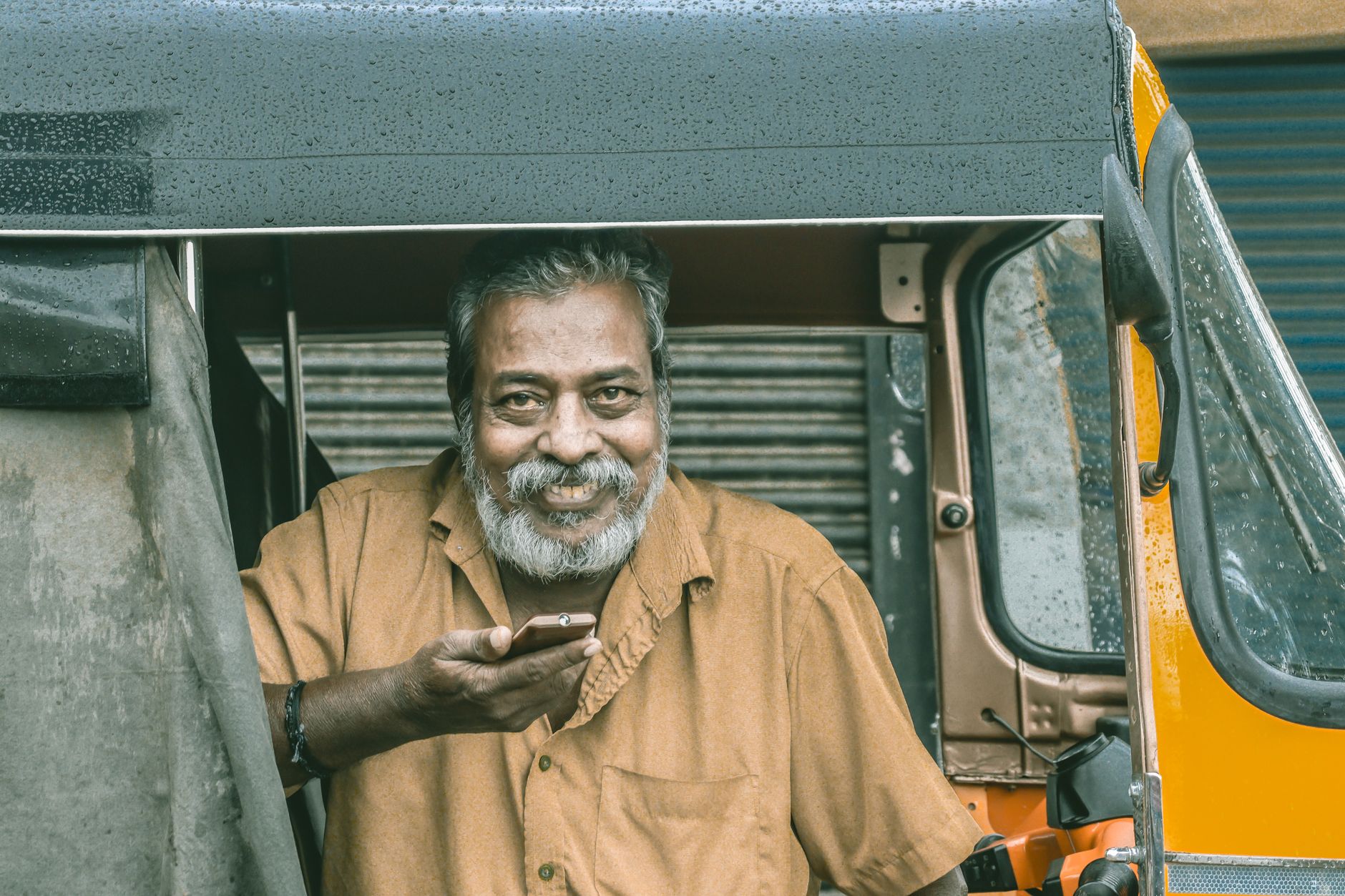
In Bengaluru, an auto fare is increasingly less about the meter and more about the passenger — how local you sound, how confidently you negotiate, and how well you perform belonging.
Bengaluru’s auto problem is no longer just about overcharging. As metro fares rise, bike taxis disappear and metered rides become increasingly optional, getting home has turned into a negotiation shaped by language, confidence and circumstance. What looks like a small daily irritation reveals a bigger civic problem: the city has rules, fares and systems on paper, but far too often, the street runs on something else.
I have been told Istanbul is one of the great bargaining cities of the world, its bazaars turning haggling into something close to theatre. I believe it, I have stood in one myself and talked a seller down in stages, enjoying every minute of it. And yet I have never had to act as hard, or get as annoyed, as I do most evenings trying to get an auto home in Bengaluru.
It usually starts the same way. I ask a driver to take me somewhere, in Hindi or English. The number that comes back is ambitious. So I switch, tell him in Kannada that I have lived here a while, that he shouldn't try this with me. His posture changes. The number drops. Sometimes he laughs, a little embarrassed, “sir, you're from here, sorry sorry sir”, as if the first quote was aimed at someone else entirely, standing exactly where I was, a second ago. Friends tell me my bargaining has gotten top notch. What they don't register is that I shouldn't need to bargain at all. There is a meter. It is sitting right there on the dashboard, mostly, for decoration.
None of this haggling is new to Bengaluru. What's new is how much heavier it's gotten this year. The former Bogotá mayor Enrique Peñalosa once said that an advanced city is not one where the poor use cars but one where even the rich use public transport. Bengaluru is being tested against that idea from an odd angle, because the rungs below the car, the metro, the auto, the shared bike, have all gotten pricier or less reliable within the same eighteen months, so leaving the car at home has quietly gotten harder rather than easier.
The metro's maximum fare rose from Rs 60 to Rs 90 in February 2025. Bike taxis, long the cheapest option on any app, were suspended across the state from June 2025, caught in a legal fight over regulations the government had never written, still unresolved a year later even after a High Court order briefly lifted the ban. Auto fares themselves went up 20 percent from August 2025, the first real revision in nearly four years, arriving weeks after bike taxis vanished and demand for autos spiked.
That timing matters. Auto unions had wanted a bigger hike, and plenty of drivers responded to the smaller number by opting out of the metered system altogether. Reporters testing this afterwards found most drivers hadn't recalibrated their meters, leaning instead on ride apps or instinct. One driver, tested on a 4.5 km ride, asked for a flat Rs 150, several times the real fare. Others keep two phones on the dashboard, one loaded with ride apps, one without, to dodge enforcement while working exactly as they please. A city helpline exists to report meter refusal. It gets only a handful of valid complaints a day, not because the problem is rare, but because almost nobody calls. Bengaluru once had twenty fixed-fare booths at its busiest pickup points. Only five still function. Even online bookings run 20 to 30 percent above the official fare through surge and platform fees, despite a 2024 High Court order capping that surcharge at 5 percent. By most accounts, that order isn't enforced either.
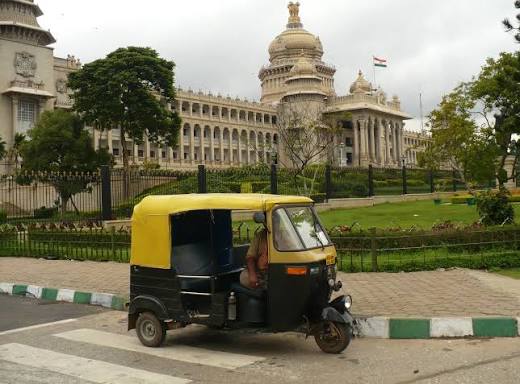
The language part is where it gets uncomfortable, and where my own experience isn't unique. Two social media creators tested this in late 2024, one in Hindi, one in Kannada, asking different drivers for the same trip. One driver quoted Rs 300 to Indiranagar for the Hindi speaker and Rs 200 for the Kannada speaker. Another refused the Hindi speaker outright and took the Kannada speaker standing right next to her. A separate widely shared clash saw a driver demand Rs 390 over an app-shown Rs 290, the argument escalating into which language the passenger should be using in his city. These aren't pranks gone viral. They're a fairly accurate map of how price actually gets set here, not by a meter, but by a quick read of how local you seem.
It would be lazy to make this purely a language story, and it isn't quite that. Bengaluru's Kannada-Hindi tension is real and tangled up with genuine anxieties about migration and who the city's growth benefits, and deserves its own telling. What's happening at the kerb is narrower. In a market where the official price stopped meaning much, language is one more signal a driver reads off you in two seconds, alongside your clothes and your confidence, to decide which fare you get.
Zoom out and the pattern repeats everywhere in this city. The footpath exists, but whether you can walk it depends on what's parked across it. The drain exists, but whether it works depends on what's built over it. The meter exists, real, government-fixed, printed, and whether you pay it depends on a two-minute performance. A rule the city wrote down carefully, and a street that decided it was optional. No single authority owns closing that gap. I don't think the answer is getting better at the performance, though apparently I have. It's worth asking why the price of getting home still comes down to how well you can act like you belong here, and whether anyone is actually responsible for making that stop being true.
Latest stories
- GMDA hires consultant to link recycled-water pipelines in Gurugram
- Railway Board sanctions trains for Bengaluru Pink Line’s elevated section
- Khalin Joshi takes six-shot lead at Bengaluru Open halfway stage
- MCG gives 24 hours to clear debris from Gurugram public spaces
- Mumbai: S. J. Poddar Academy Grade 6 students curate Zoographia
- Marsh crocodile rescued from 8-foot electricity duct at Aarey Metro complex
- Western Railway says Mumbai division collected 5.2 tonnes in cleanliness drive
- Over 1,000 students exhibit work at Bengaluru children’s biennale
- Delhi to set up 110 collection centres for old and damaged idols
- Mumbai: Nani says The Paradise makers expected an A certificate
- Niranjan Hiranandani shows six-storey Malabar Hill home Kanta
- Mumbai chocolatier makes 75kg chocolate Ganesha idol for Pune
- Heavy vehicles barred on Varthur-Gunjur SH-35 during peak hours
- CSMT inspection: PAC seeks wider north-side entry for evening rush
- Bengaluru Airport T2 hosts ten-day Odia food festival
- Delhi sets up 78 artificial ponds for Ganpati visarjan
- Mahapanchayat backs Gurgaon road-collision accused; biker calls it an attempt to shift the narrative
- Bengaluru Cantonment station redevelopment expected by December 2026
- Railways approves ₹497 crore to double Chouk–Karjat line
- Delhi Metro logs record 82.45 lakh boardings during DTC strike
Cities
- Delhi news
- Gurgaon news
- Noida news
- Greater Noida news
- Ghaziabad news
- Faridabad news
- Delhi NCR news
- Bengaluru news
- Mumbai news
- Navi Mumbai news
- Thane news
Sections
- Top Stories
- Latest
- Politics
- Governance
- Civic Issues
- Transport and Traffic
- Metro
- Roads and Infrastructure
- Weather and Air Quality
- Business and Startups
- Real Estate
- Education
- Health
- Environment
- Courts and Policy
- Safety
- Arts and Culture
- Events
- Things To Do
- Food and Drink
- New Openings
- Shopping
- Nightlife
- Neighbourhoods
- People
- Technology
- Sports
GTK covers the news, people, culture, neighbourhoods, civic life and food shaping India’s cities. Better Starts With Us.