Timarpur Durga Puja display traces Bengali migration to Delhi
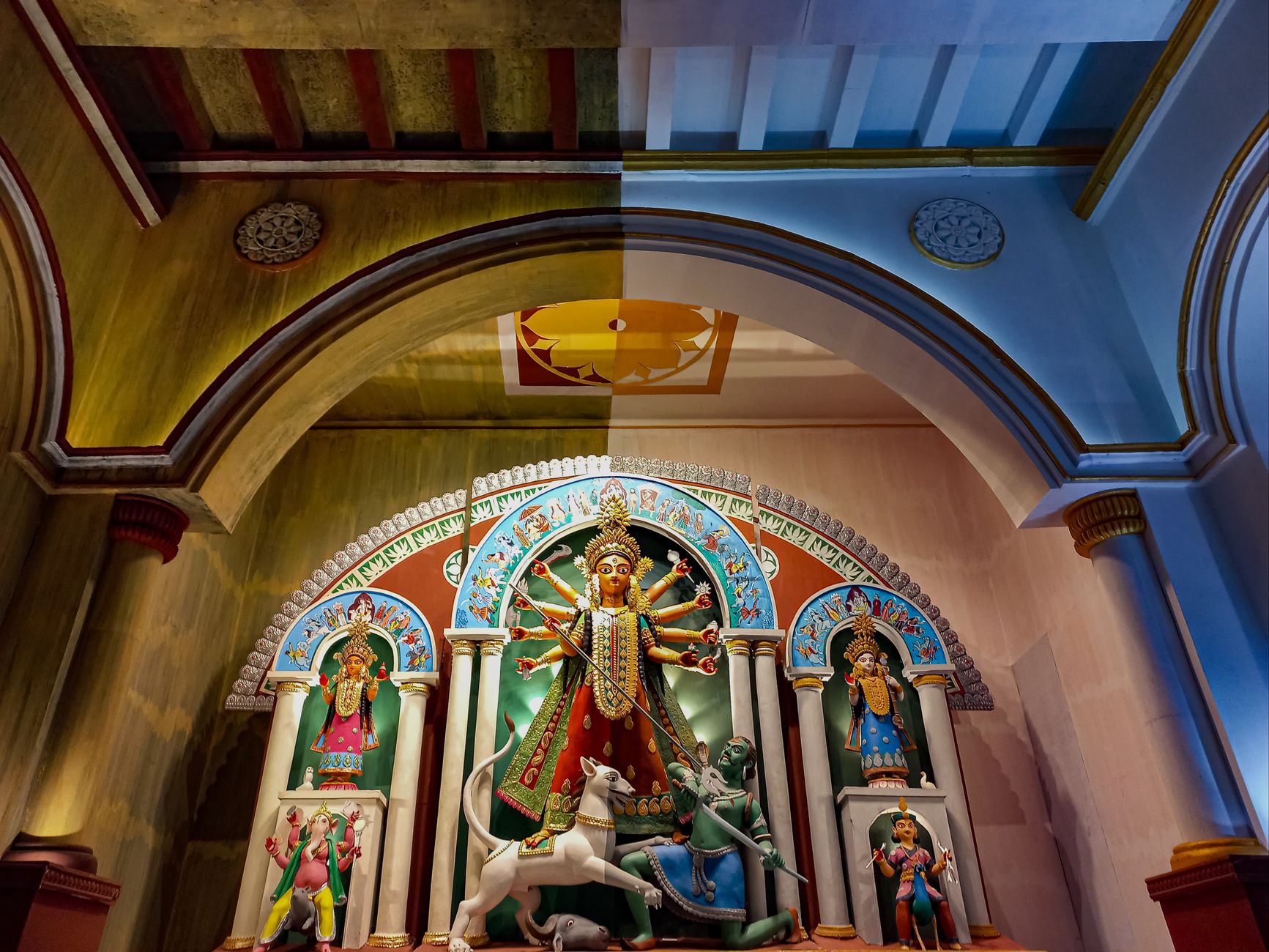
The 113-year-old Timarpur Durga Puja has built this year’s presentation around Bengali families who arrived in Delhi during the capital’s early 20th-century shift.
Timarpur Durga Puja’s steam-engine entrance and recreated records trace Bengali migration to Delhi; six families depicted are imagined composites.
A giant steam engine bearing the East Indian Railway insignia stands at the entrance to Timarpur’s Durga Puja, pointing visitors towards a journey Bengali families made to Delhi more than a century ago.
The north Delhi puja, which its organisers describe as the city’s second oldest, is marking its 113th year with ‘Dillir Buke Bangla’—Bengal in the heart of Delhi. The presentation traces the arrival of Bengali families around the time the British capital moved from Calcutta to Delhi in 1911, focusing on people who made Timarpur their first Delhi home.
Kamal Banerjea, part of the seven-member team behind the presentation, said the curators wanted to tell the story of people who arrived between around 1908 and 1920 and encountered an unfamiliar climate, language and city.
A migration story built from fragments
The presentation describes Timarpur as Delhi’s first government colony, established after the city became the capital of British India. It says families arriving there were initially housed in temporary quarters.
The exhibition uses six imagined families to represent that experience. Banerjea said the team found no records identifying the people who moved during that period, so it created the families to make the broader history accessible rather than claim specific biographies.
For six months, the group filed Right to Information applications with departments, searched Delhi’s digital archives and examined old wedding invitations and receipts kept by community members. It also looked into railway companies and routes connecting Calcutta and Delhi, seeking evidence of how people travelled.
Letters, tickets and an old railway route
The displays recreate historical material through illustrations, printed copies and documents treated with tea water for an aged finish. The team chose offset printing instead of digital printing for some reproductions.
According to the team’s research, Bengali families began arriving in Delhi in small numbers after the Calcutta-Delhi rail link opened in 1864. The flow increased around the capital shift, though the Timarpur presentation does not seek to speak for every Bengali migration experience in the city.
The display also refers to Bengali communities in Kashmere Gate and Chandni Chowk, followed by Karol Bagh, Minto Road and neighbourhoods around Kali Bari. At the Timarpur pandal, visitors can see the old rail route alongside recreated letters, receipts and railway material.
Latest stories
- Timarpur Durga Puja display traces Bengali migration to Delhi
- Gurugram MCG deploys night teams for GRAP pollution checks
- Delhi University sets 2026 PhD test format for four-year UG graduates
- Dwarka traffic curbs possible on October 20 for Dussehra
- Mumbai Central installs two plastic bottle-crushing machines
- Navi Mumbai Rotary clubs send Shadu clay to Badlapur artisans
- Wagle Estate’s Indira Nagar Ramleela marks 33 years
- Nagarbhavi’s Goofy wins Fat Dogs of Bengaluru online contest
- JP Nagar’s Beku Books joins the Sunday Letter Project
- IIT Delhi applications open for managerial decision-making course
- Bengaluru label Advaya launches paisley-focused Eternal Series II
- 4 events in Delhi and Gurugram on October 20
- Yami Gautam to join Dussehra Ravan Vadh ritual at Delhi’s Red Fort Ground
- CR Park Durga Puja draws long queues during Maha Saptami
- FIBA Women’s Basketball League Asia opens in Bengaluru
- MCD seals three unauthorised dhobi ghats in Old Delhi
- Delhi tenders lighting upgrades for 969 bus shelters
- Bengaluru North seeks reports of bulk waste in household auto-tippers
- East Delhi traffic diversions possible on October 20 for Dussehra
- GMLR tunnel boring reaches 183 metres beneath Sanjay Gandhi National Park
Cities
- Delhi news
- Gurgaon news
- Noida news
- Greater Noida news
- Ghaziabad news
- Faridabad news
- Delhi NCR news
- Bengaluru news
- Mumbai news
- Navi Mumbai news
- Thane news
Sections
- Top Stories
- Latest
- Politics
- Governance
- Civic Issues
- Transport and Traffic
- Metro
- Roads and Infrastructure
- Weather and Air Quality
- Business and Startups
- Real Estate
- Education
- Health
- Environment
- Courts and Policy
- Safety
- Arts and Culture
- Events
- Things To Do
- Food and Drink
- New Openings
- Shopping
- Nightlife
- Neighbourhoods
- People
- Technology
- Sports
GTK covers the news, people, culture, neighbourhoods, civic life and food shaping India’s cities. Better Starts With Us.