Humayunpur, Long Before the Hashtags
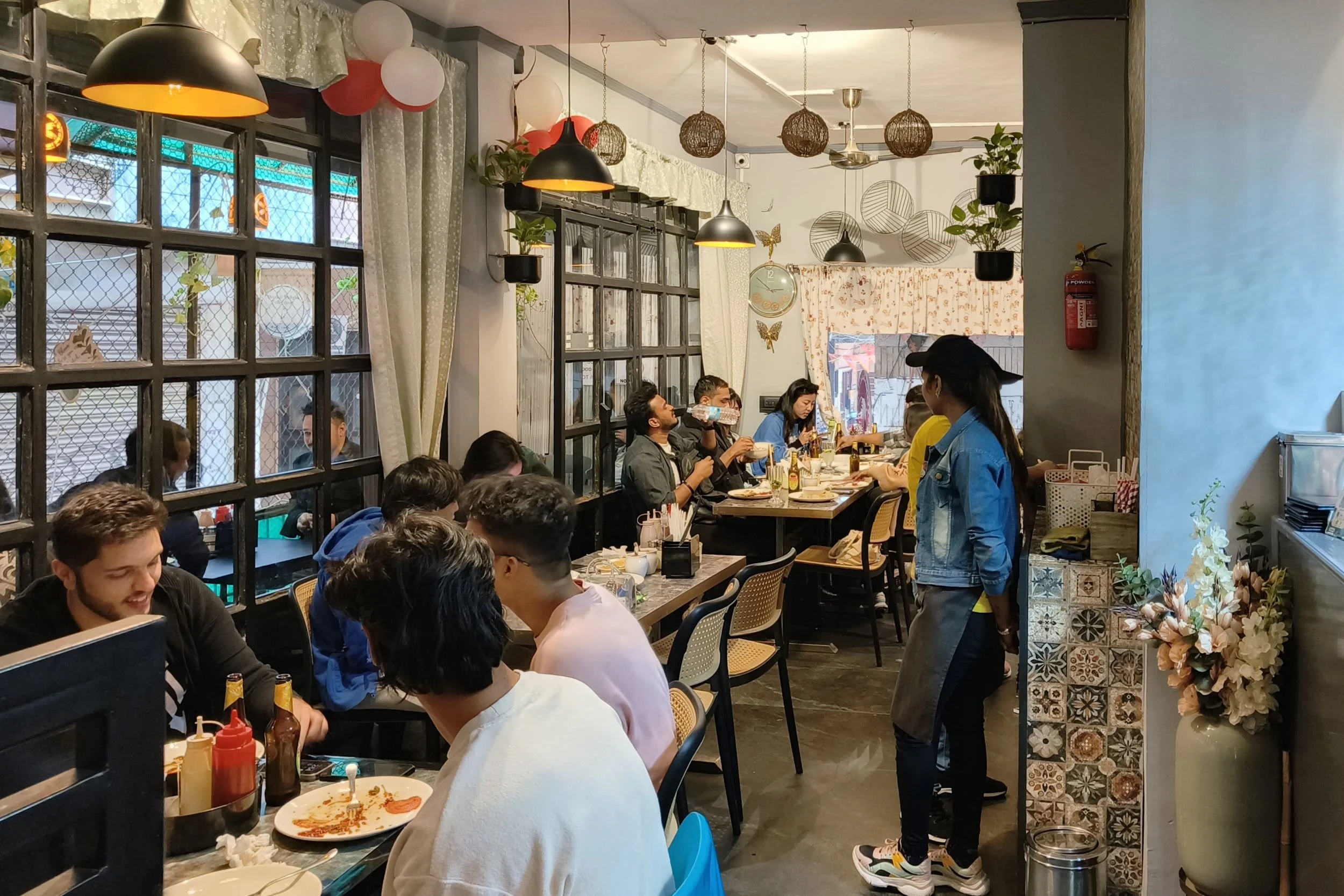
Humayunpur became a home for Northeastern and Tibetan migrants long before it became a destination for food bloggers. Now, as popularity pushes up rents and safety failures threaten livelihoods, the neighbourhood is being forced to carry the cost of being discovered.
What began as a refuge built around familiar food, language and community has become one of Delhi’s most talked-about culinary neighbourhoods. This essay looks beyond the reels and restaurant lists to the people who gave Humayunpur its identity, and asks what happens when visibility, rising rents and neglected infrastructure begin to threaten the very community that made the place worth noticing.
Right where you enter the Humayupur market, through Bhansaghar, the lanes cackle with several Northeastern diners wafting scent of home for some and amazement for others. In that same lane, nestles a sweet corner serving many bites of joy through their Manipuri cuisine. Over the months, I have developed an insane obsession for their Pakora Thongba, a beautiful bowl of fritters and peas swimming in a hot stew. Every gulp and crunch is a direct descend to paradise. Hailing from a background as Bihari as it comes, have lived all my teens in the green of Jharkhand, only to be surrounded by North Indians throughout my college life, there’s no way I could have discovered this beauty on my own. I owe this visit of great food into my life through a very good friend of mine who I met during the first year of my postgrad.The friend is a native of Imphal, and like many young people from home, came chasing an education far from a state that's seen more than its share of unrest in recent years. They have been in the capital city for about a decade now. Of the many pockets of Delhi, they have embraced as a make-do home, Humayupur has been a perpetual haven.
A lot of Northeasterns and Tibetan migrants share the sentiments of my friend. Ask anyone who's spent even a fortnight here, and the word "home" tumbles out before they've even finished chewing their momo. Not the polished, Instagram caption kind of home. The real, messy, my-mother-used-to-cook-this kind. Humayunpur was never meant to hold this much longing, honestly. It started life as a plain old Jat village, farmland handed over decades ago so the government could build the far shinier Safdarjung Enclave right next to it, leaving this little urban leftover to fend for itself. Nobody planned for it to become a homesick student's lifeline. It just happened, the way most beautiful accidents in Delhi do.
**When the World Finally Noticed**
And then, quite suddenly, the world decided to notice. Somewhere along the way Humayunpur got crowned one of the coolest, most-loved food neighbourhoods around, magazines started dropping its name like it was the new discovery of the season, and every third food blogger with a ring light suddenly had strong opinions about the best laphing joint. I get the appeal, truly, I've fallen for it myself, but there's something a little unsettling about watching a place get applauded for a culture it didn't build, celebrated by outsiders for flavours that were somebody else's survival before they were anybody's trend.
**Fame on Somebody Else's Terms**
It's a strange kind of fame, the kind that arrives entirely on somebody else's terms. Nobody asked the Naga aunty running her tiny smoked pork stall whether she wanted her Sunday routine turned into a reel with a trending audio slapped over it. Nobody asked the Mizo boy who opened his little diner years ago, back when this street was just cheap rent and familiar faces, whether he was ready for a queue of outsiders treating his childhood dinner as this season's aesthetic. The neighbourhood said yes anyway, mostly because it had to, because when you're building a life in a city that's never quite made room for you, you take the visibility and quietly hope the goodwill outlasts the trend cycle.
**The Wiring Nobody Photographs**
Because here's the thing nobody puts in the caption. This same lane, this exact stretch that gets photographed for its "vibe," runs on wiring that looks like abstract art and buildings that were never meant to hold five floors of restaurants stacked one on top of another. And earlier this year, when a fire tore through a building in Malviya Nagar and took twenty one lives with it, the city suddenly remembered that Humayunpur exists too, not for its food this time, but for its fire hazard potential. The MCD swept in and shut the whole market down, restaurants told to stay closed until further notice, no real timeline given, just an indefinite question mark hanging over people's livelihoods.
Imagine that whiplash for a second. One week you're the coolest neighbourhood on some glossy list, staff at your favourite izakaya are getting asked for behind the scenes reels, and the very next you're staring at a shutter that won't lift because nobody bothered checking the wiring in the last decade. "Humayunpur is shut today and so are we," one server told a reporter, and honestly, that one line carries more grief than most headlines manage in five hundred words. What gets me is how quietly this whole thing sits underneath all that praise. We loved this place for what it gave us, the smoky momos, the bootleg K-pop playlists spilling out of speakers, the graffiti on old village walls, and never once paused to ask who was actually paying rent to keep that magic running, or whether the roof over their heads was even safe. The people who built this identity, brick by brick, bowl by bowl, migrants who came here fleeing conflict or just chasing an education far from home, are the same people now standing outside shuttered restaurants wondering how they'll make next month's payment to a landlord who's been quietly raising rents for years anyway.
**Money In, Never Back to the Hands That Earned It**
Because that's the other quieter tragedy nobody talks about at brunch. Long before this shutdown, the rents in Humayunpur were already climbing, pushed up by the very popularity that made outsiders like me fall in love with it in the first place. The older migrants, the ones who set up the first tiny eateries and grocery stalls selling bamboo shoot and fermented fish from home, are slowly being priced out of the exact community they created. There's a version of Humayunpur's future where it looks suspiciously like Hauz Khas Village, all glitter and expensive cocktails, and none of the people who gave it a soul. There's a particular kind of irony baked into that trajectory too, if you sit with it long enough. The same rents that push out the woman who built her livelihood one smoked pork batch at a time are the ones now being paid, gladly, by a fresh wave of newer, glossier cafes designed for exactly the crowd that made the neighbourhood famous in the first place. Money flows in, sure, but it rarely flows back to the hands that earned this place its name.
**A Home That Doesn't Need a Five-Star Review**
My friend still goes back, obviously, whenever she can, even now with half the shutters down. She says it's less about the food most days and more about hearing Meiteilon spoken on the street, seeing another Manipuri face nod at her in easy recognition, the kind of unspoken solidarity you only understand once you've lived far enough away from everything familiar. That's not something a five star review can capture, no matter how many stars you throw at it.
**Trending Isn't the Same as Standing**
So here's my question, and I genuinely don't have a neat bow to tie this up with. Can a neighbourhood be simultaneously the coolest thing since sliced bread and one crumbling fire hazard away from disaster. Can it be somebody's actual home and everyone else's weekend content at the exact same time. I think the honest answer is yes, uncomfortably yes, and maybe that discomfort is the whole point. Humayunpur was never asking to be discovered. It was just trying to survive, one plate of Pakora Thongba, one homesick evening, one overworked electrical wire at a time. The least the rest of us can do, before we post our next carousel from its lanes, is actually ask what it would take to keep the place standing, not just trending.
Latest stories
- In-Conversation with Subir Malik – “We started Parikrama 35 years old as a bunch of young kids who love rock and roll and we are still those kids…”
- Humayunpur, Long Before the Hashtags
- Bengaluru logged 111.1 mm rain during Karnataka’s 2024 monsoon onset
- Fitour opens 14-seat, 18-course tasting menu in Bandra
- Mumbai to host Kia Tennis Premier League Season 8 auction on October 12
- At a Mumbai event, Vidyut Jammwal describes the discipline of Hollywood sets
- The Writing on the Wall and Small Defiances in Bengaluru
- India Mobile Congress 2026 opens in Dwarka on October 7
- Nine Days of Worship and a Never Ending War (against Patriarchy)
- At Ghalib’s Ballimaran haveli, a pink bucket shares space with poetry
- Andheri West: BMC sets December 2027 target for Kavathe Creek bridge
- Ireland education fair opens in Delhi with 17 universities
- Central Railway sets weekly, monthly checks at 17 Mumbai stations
- Delhi, Gurugram events on October 6: concert, films, jazz and comedy
- GMDA tenders Rs 7.2 crore service roads in Gurgaon’s Sectors 99 and 102
- MCG directs senior officers to inspect Gurgaon garbage hotspots daily
- Mumbai stations to review train announcements after one-minute gaps
- NMIA e-Shivai buses to Dadar, Borivali and Pune start October 7
- Flyadeal begins five weekly Mumbai–Riyadh flights
- Chandapura traffic delays stretch past two hours on Monday
Cities
- Delhi news
- Gurgaon news
- Noida news
- Greater Noida news
- Ghaziabad news
- Faridabad news
- Delhi NCR news
- Bengaluru news
- Mumbai news
- Navi Mumbai news
- Thane news
Sections
- Top Stories
- Latest
- Politics
- Governance
- Civic Issues
- Transport and Traffic
- Metro
- Roads and Infrastructure
- Weather and Air Quality
- Business and Startups
- Real Estate
- Education
- Health
- Environment
- Courts and Policy
- Safety
- Arts and Culture
- Events
- Things To Do
- Food and Drink
- New Openings
- Shopping
- Nightlife
- Neighbourhoods
- People
- Technology
- Sports
GTK covers the news, people, culture, neighbourhoods, civic life and food shaping India’s cities. Better Starts With Us.